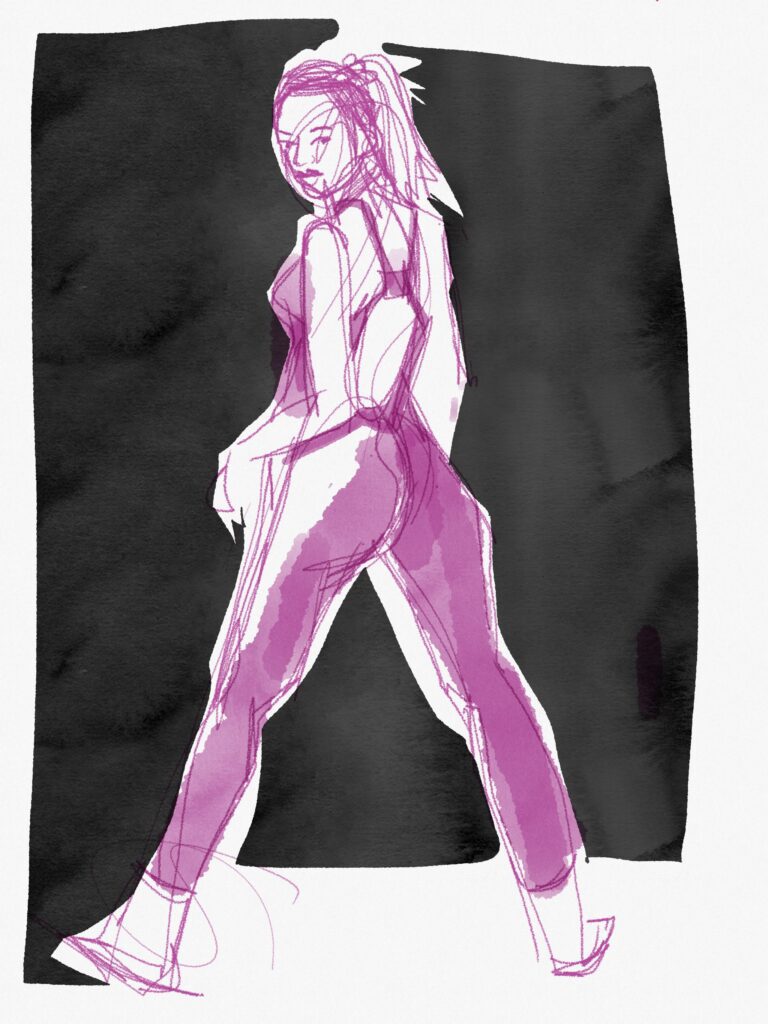
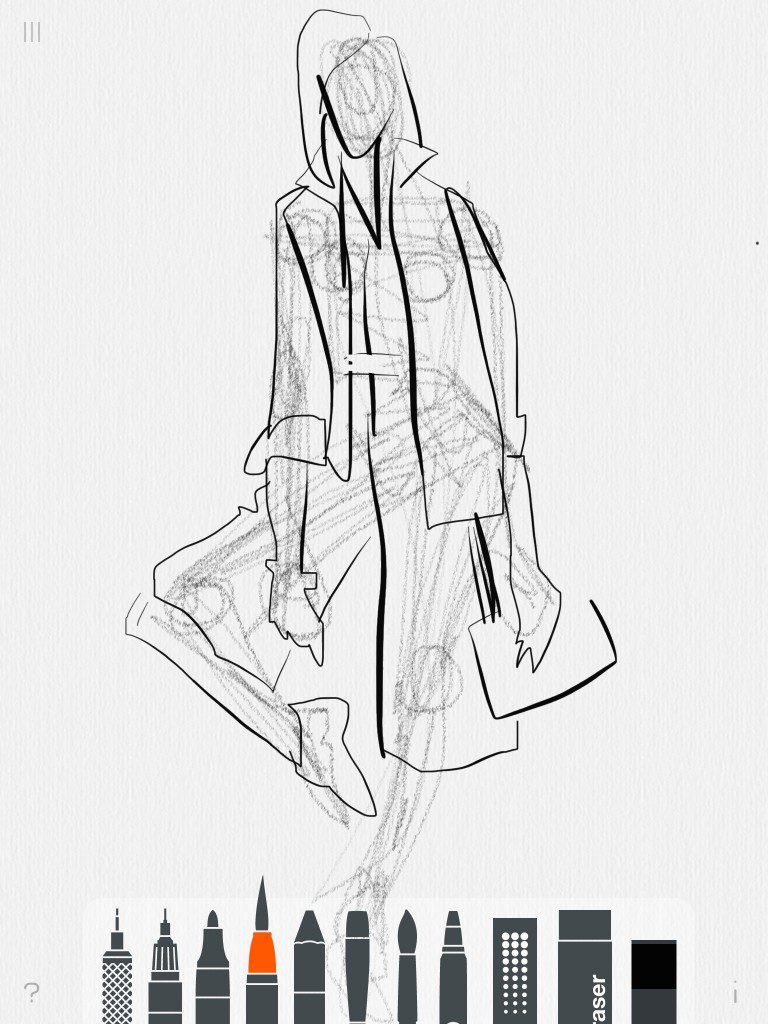
Contour Drawing for fashion illustration
Contour drawing is one of the most important drawing lessons for fashion illustration and beyond that you will ever learn.
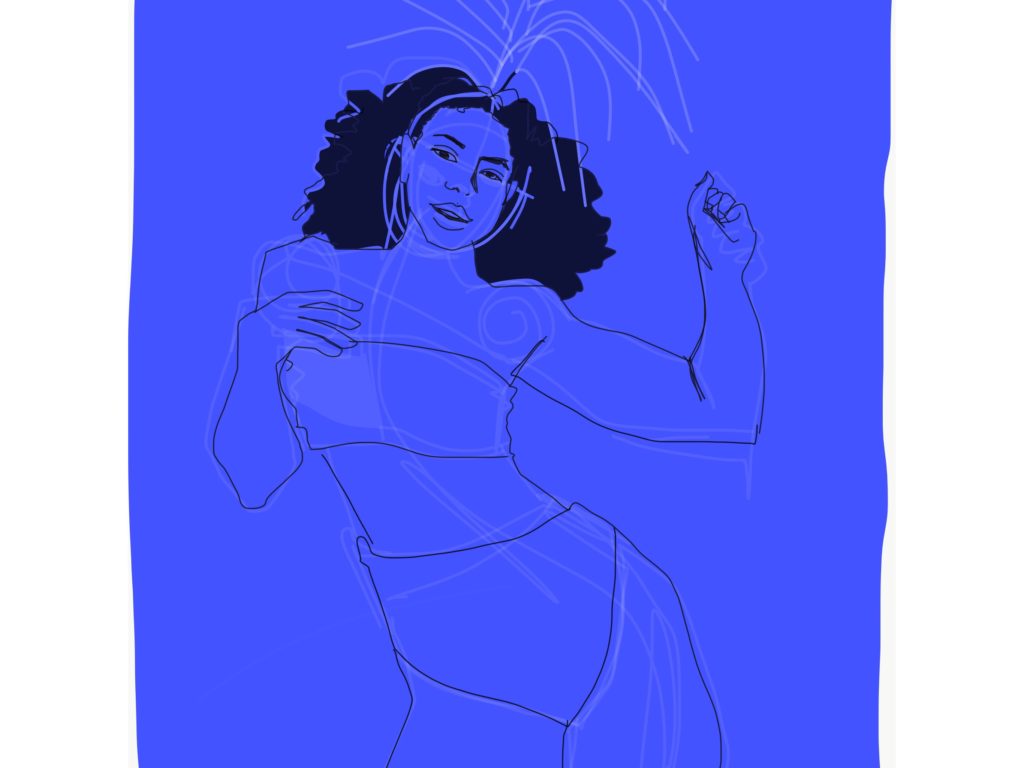
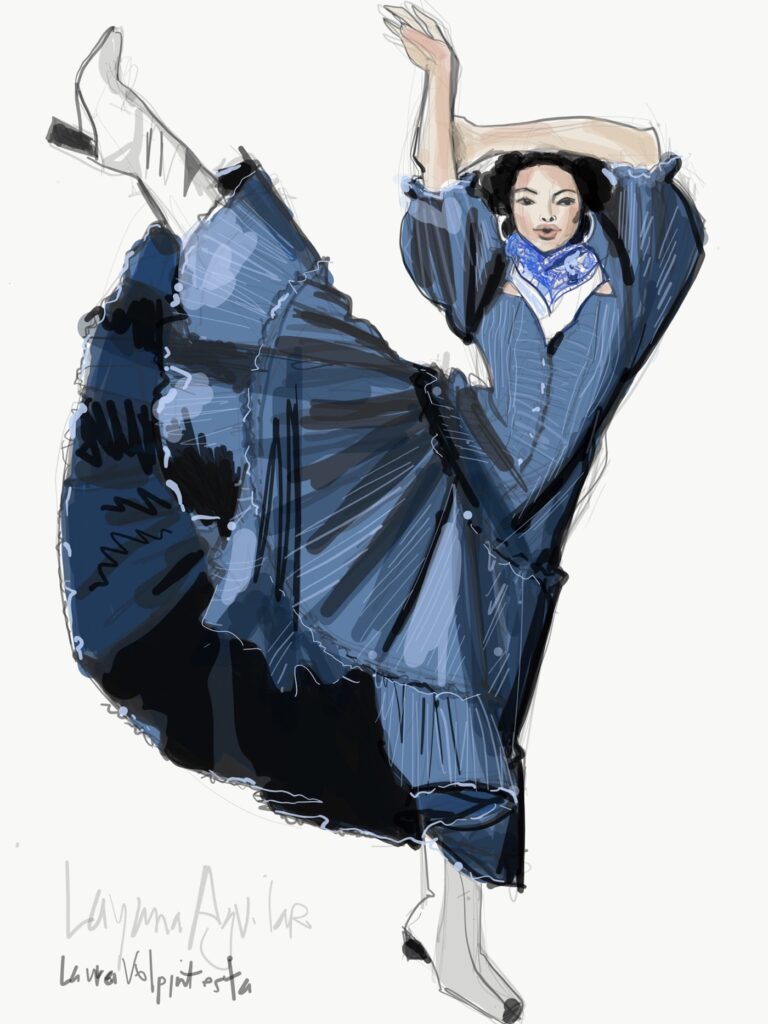
Whether you use a paintbrush, pencil, ink pen, or crayon, it really doesn’t matter– even digital drawing like at the top of this page, CONTOURS are a VERY POWERFUL part of your expressive toolkit in fashion drawing!!!
WHY?
The truth is, whether you realize it or not, contour drawing (WEAK or STRONGLY executed) is “happening” in your fashion sketches. Mastering and giving attention to you contours? WIll make a big difference in how effective or emotional your visual communication is.
Let’s dive in so you can use contour drawing CONSCIOUSLY in your fashion sketches.
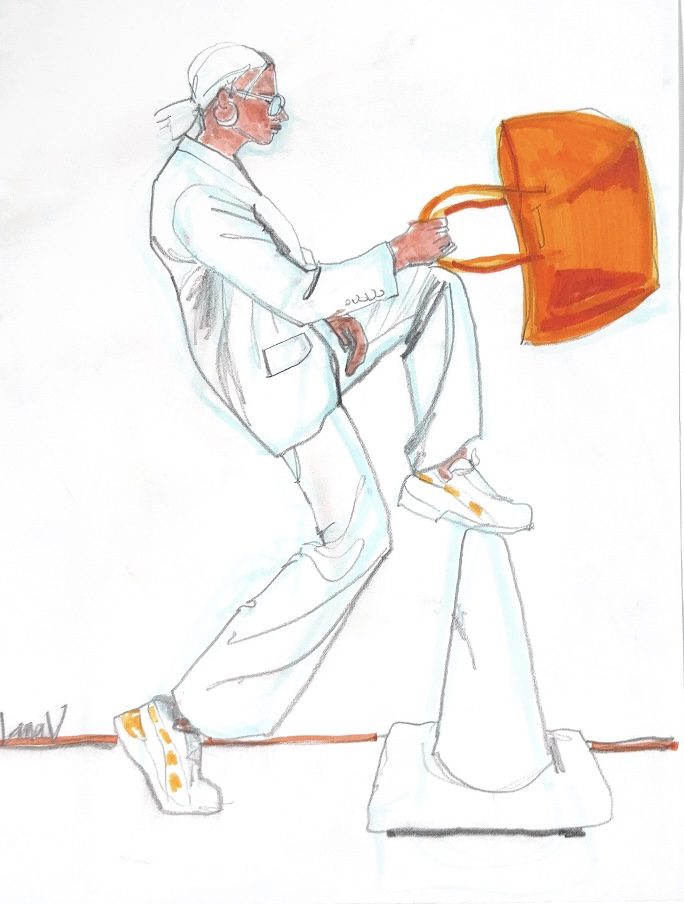
CONTOUR DRAWING technique translates edges into lines.… and in fashion drawing, EDGES give us so much crucial information about fabric, fit, and silhouette.
Imagine, how can we tell if a fabric is thick or thin, firm 0r drapey, knit or woven, quilted, fuzzy, smooth or sequined just by viewing its outlines? We can express through shape, shadow, color, and through CONTOUR.
To execute contour drawomg effectively, I recommend that you use something that shows up on the page well so that when you finish the exercise and look at your drawing, you can see the impact of the exploration that you’ve done. (For example, don’t use pale or soft colors. Go for a bold black pencil or pen.
Pressure sensitivity adds another layer of information to your line quality, so SOFT GRAPHITE or BRUSH TIP PEN enhance this through their sensitivity).
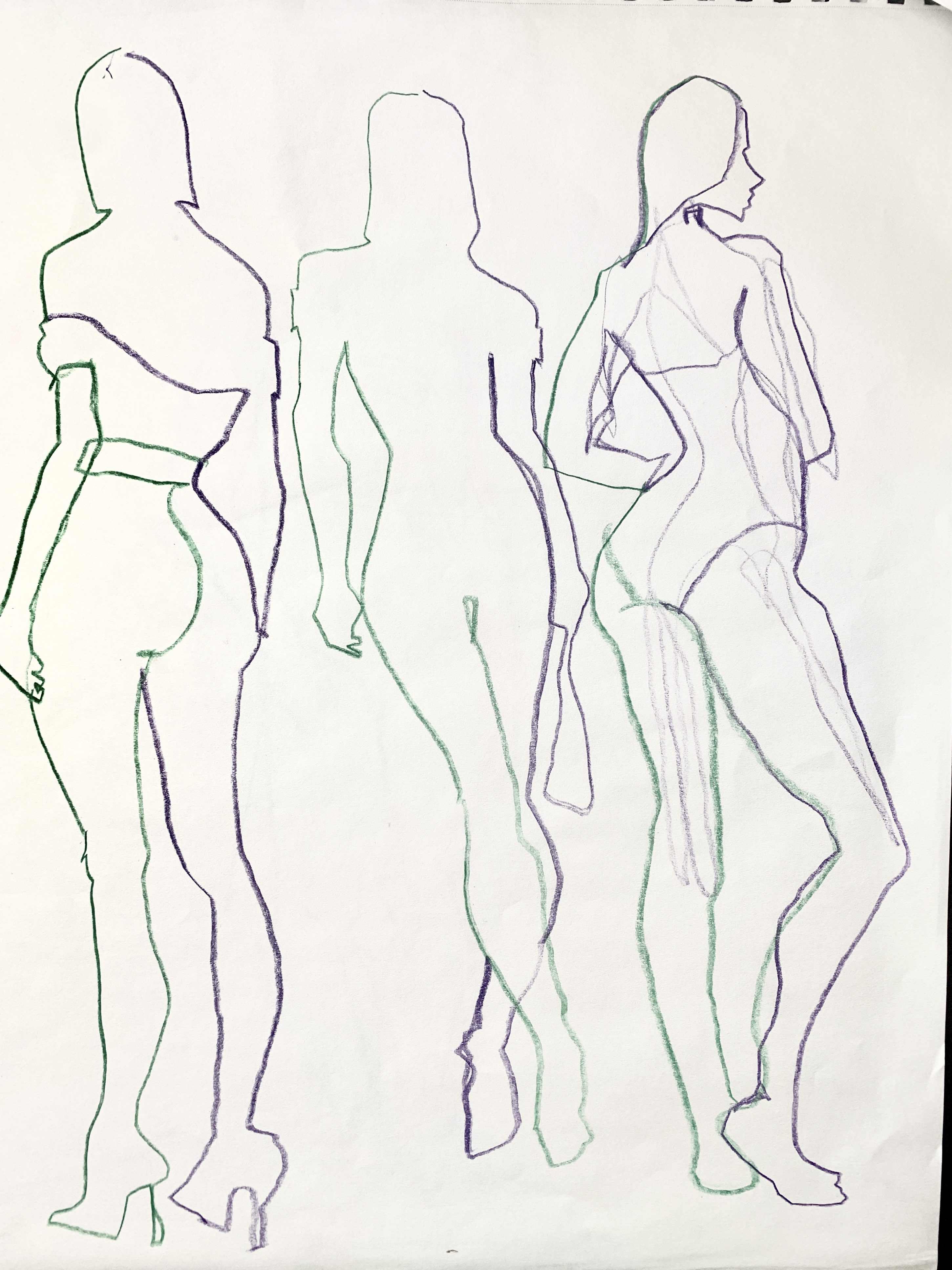
It doesn’t always “sink in”the first time, but once you “get it” , CONTOUR DRAWING exercise is an experience you never graduate from, it ALWAYS brings discovery.
It’s an exercise you will always be able to tap into, enjoy, relax, surprise yourself, get a deep joy AND deepen your ability to communicate texture, line, and edges in fashion illustration, fine arts, design, and beyond.
CONTOUR DRAWING EXERCISE:
- Set a timer for 10 minutes. Maybe put on music?
- REMEMBER THIS DRAWING DOES NOT NEED TO BE “COMPLETED”. Only move the pencil and eye together for 10 minutes.
- This will feel odd at first, then relaxing, meditative, and “in the moment” in a very liberating way!
- Choose something to look at with interesting edges (can be fashion or even a plant , trees, or flowers).
- Don’t look at your page/hand/paper
- Do this on paper and not digitally (physical experience).
- Only look at what you see in front of you
- Choose a starting point on the object you are viewing and move your eye along that edge like a little car driving along the edge
- Tune in deeply to the character of the edges.
- Let your pencil move along the page following your eye’s path. Practice sychronizing the eye and the hand.
- REMEMBER NOT TO LOOK AT THE PAGE
- You will see your result only at the end. NO JUDGMENT.
- EXERCISE IS OVER when the timer dings.
- Remember that the results of proportion and style is not important yet- only the DESCRIPTIVE AND HONEST RAW TRUTH of your line describing the edges you observed.
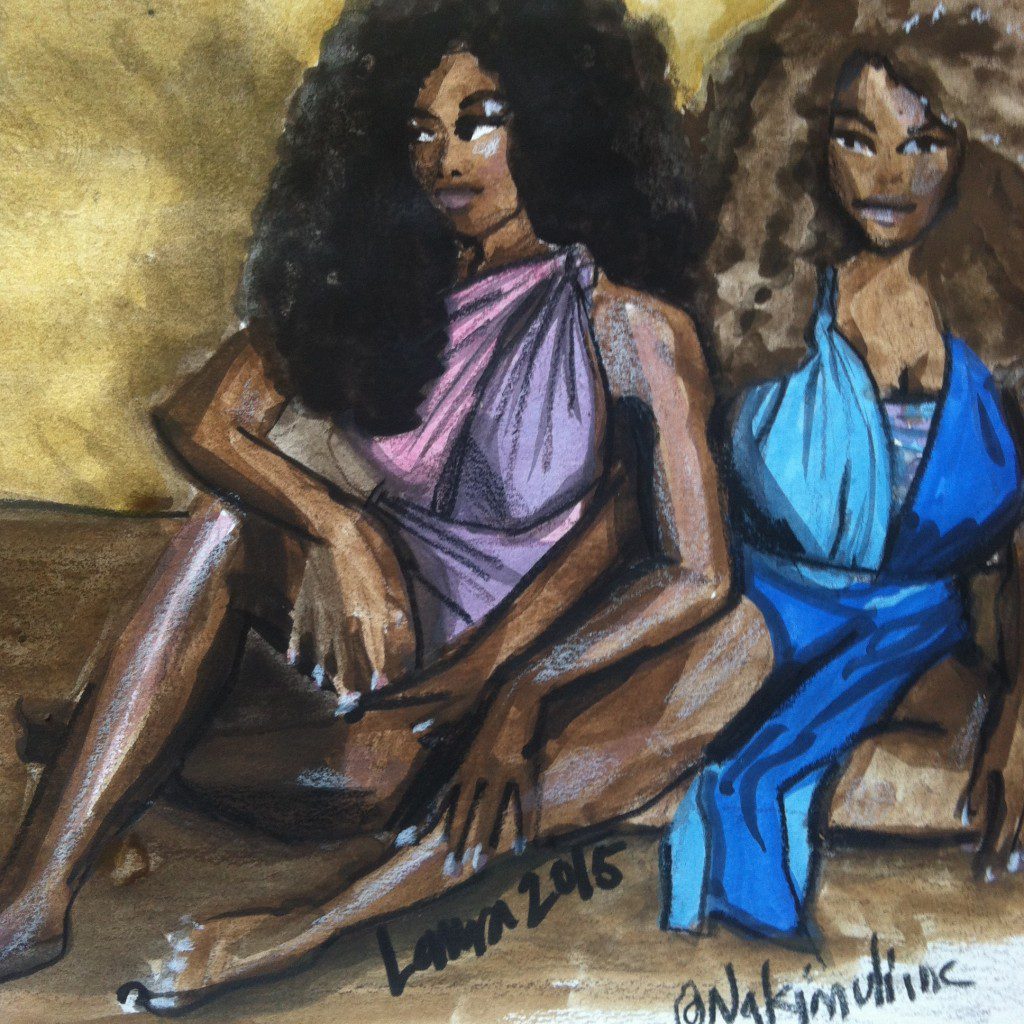
My favorite part of the contour drawing below is her hand/fingers….
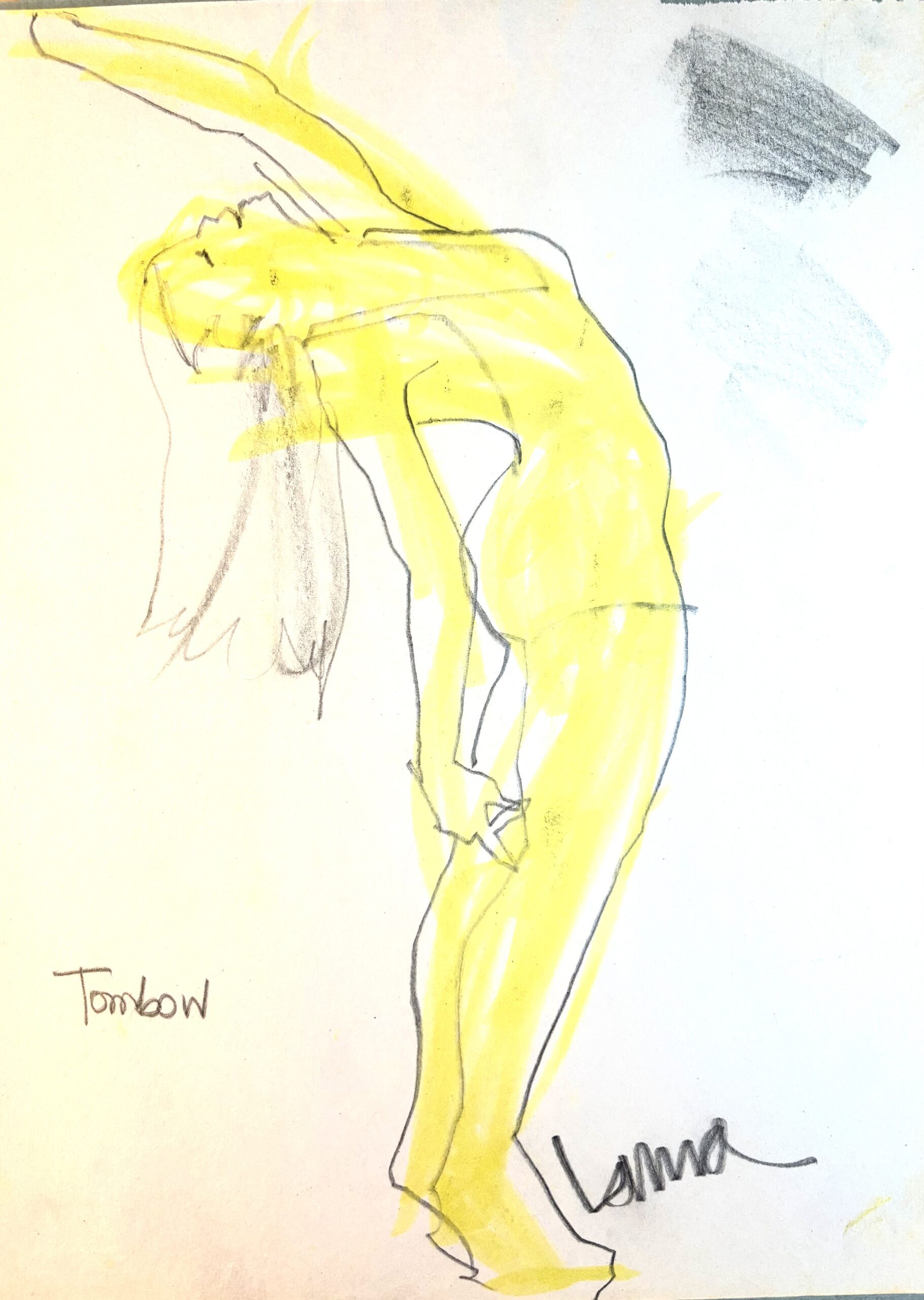
So how could you not be curious :0)???
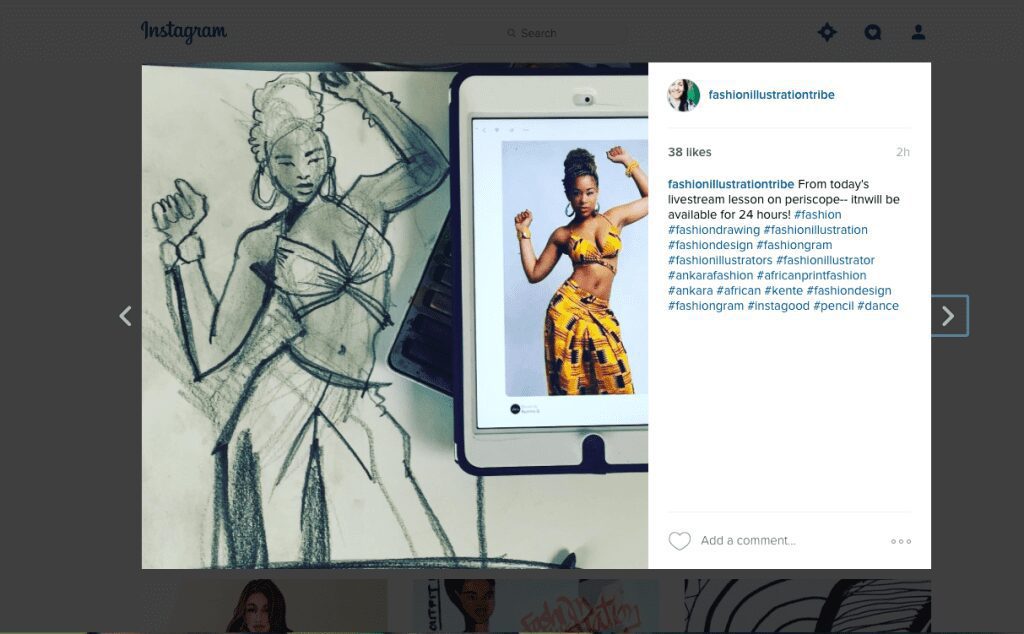
The example photo below has great contours, but not continuous ones.
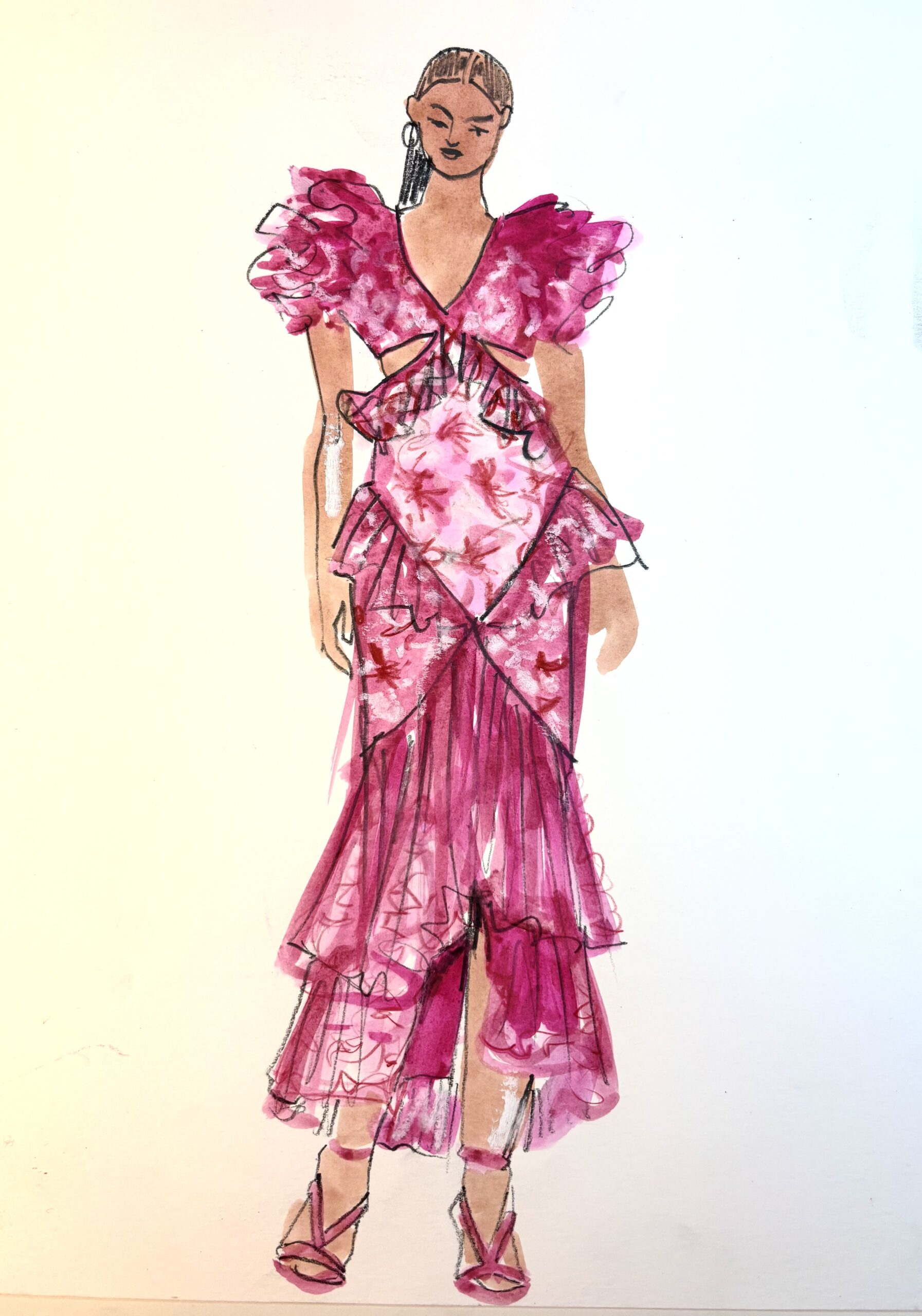
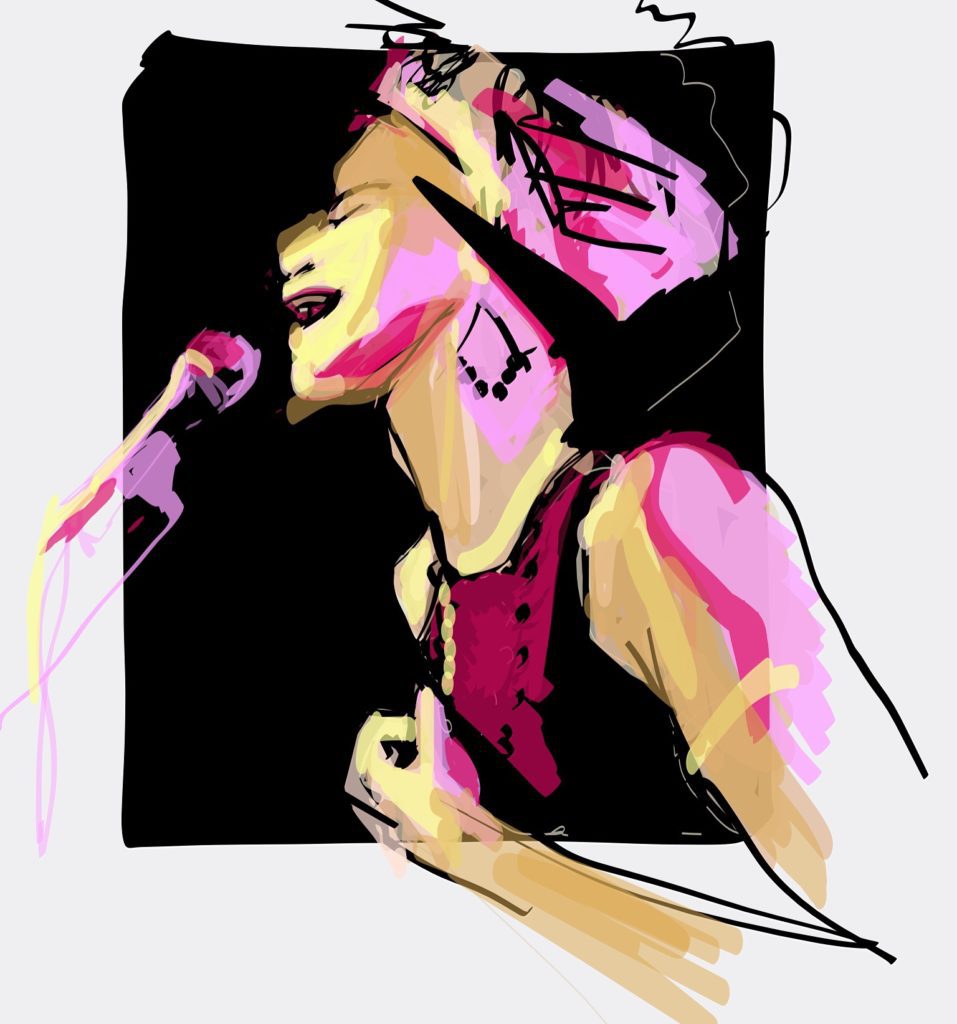
In the video below, you can see how an illustration is changed by adding some crisp lines for definition after painting the illustration in gouache. I’ve always called this “holding line” and it’s really important to add these lines for clarity after paint is applied because detail can be lost.
Look at the difference “before” and “after”-
BEFORE: I used Ebony pencil to create the drawing.
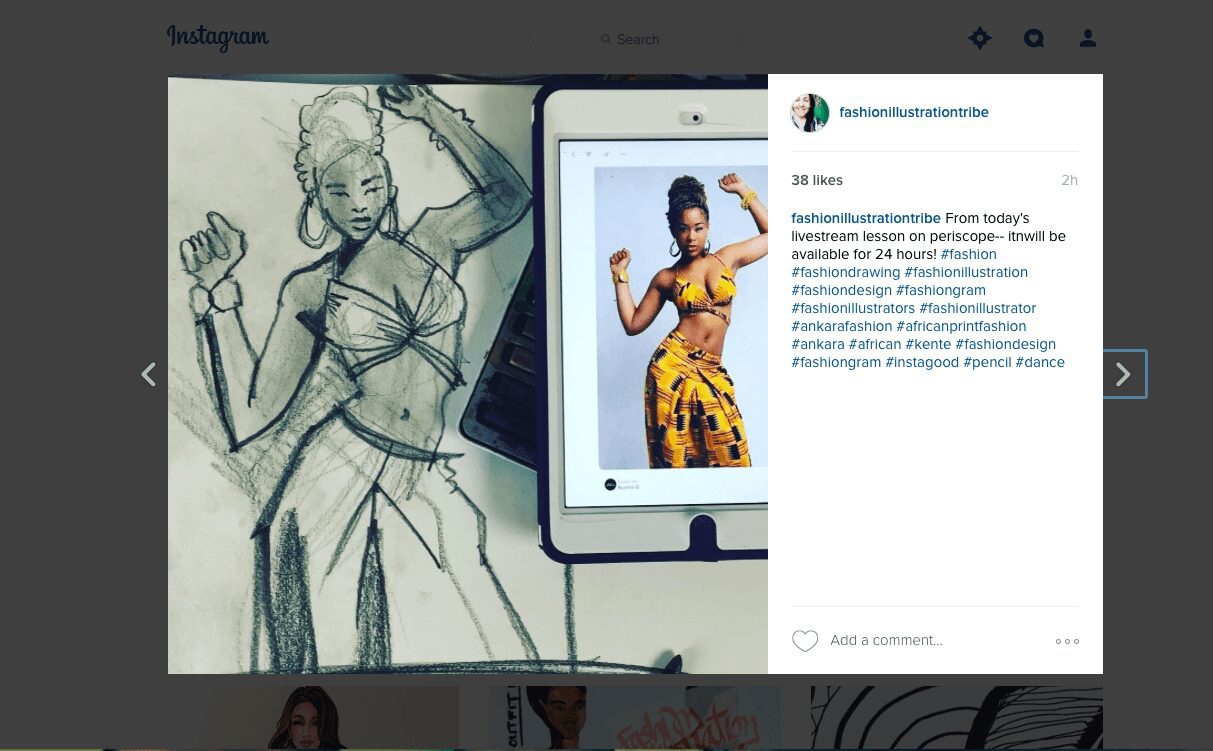
AFTER: using a brush tip marker/ ink pen to add definition through contour line
EXAMPLE:
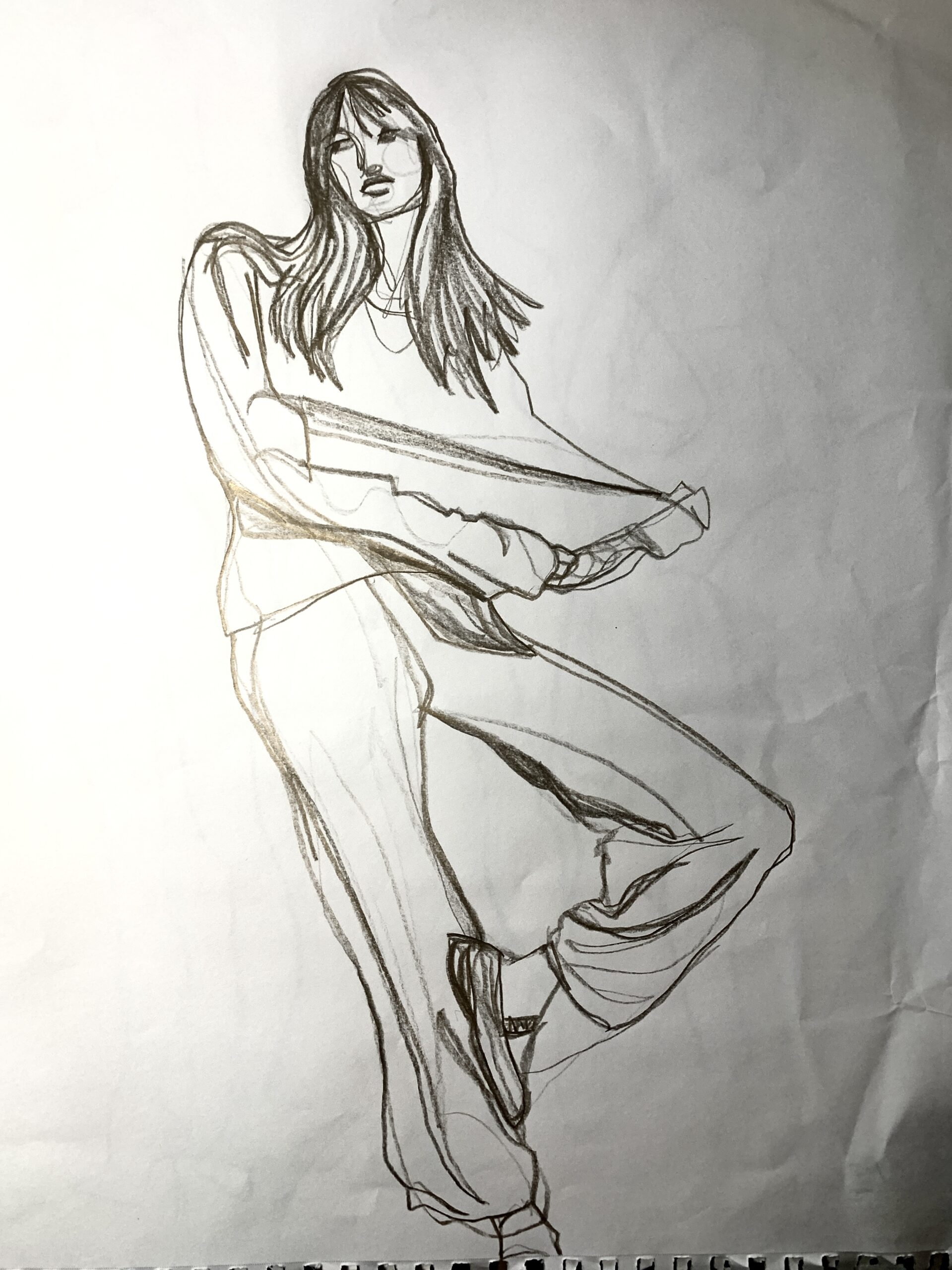
COMMUNICATING WOVENS
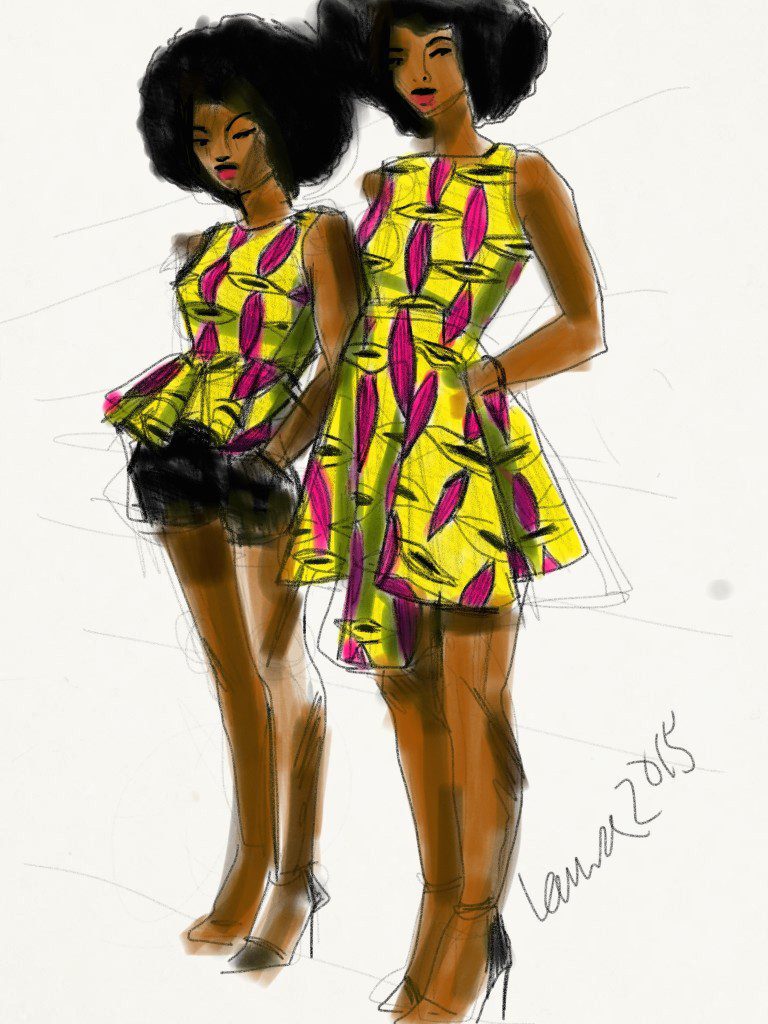
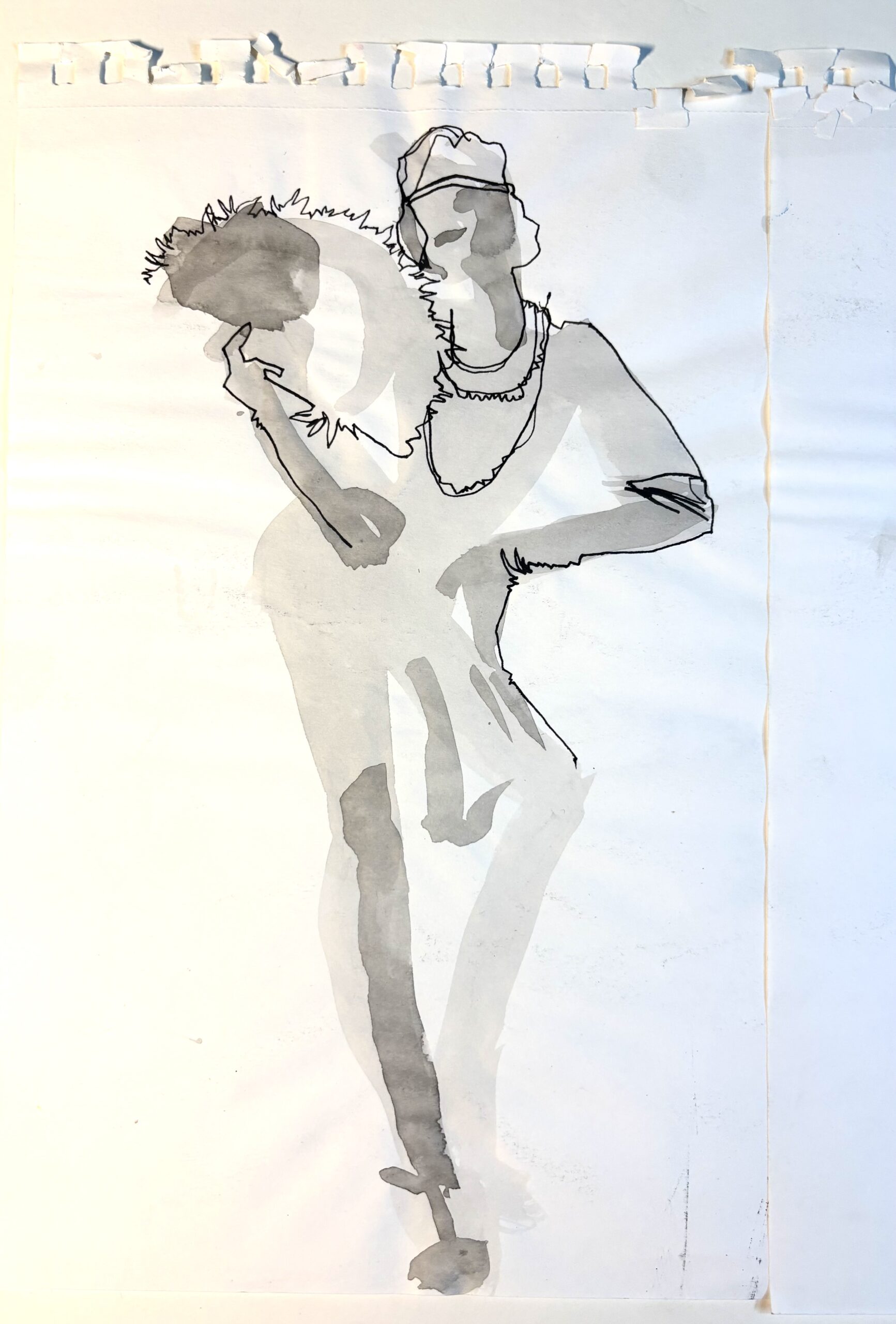
notice how crisp, angular lines show that a fabric is woven or sharp, and give attitude and energy to the silhouette.
Notice the edges of the hair shape, the corners of cuffs and collars, the wrinkles and corners of hems , shoes, beads around the neck, etcetera!
They tell you about the texture of the hair, the skin, the fabric, etc…. each with contrast and dynamics that really tell a story about the fashion that is amped up and realistic!
CONVERSELY, let’s look at a contrasting texture!
COMMUNICATING KNITS
Knitwear is made from interlocking loops of yarn, and thus is communicated in fashion contour drawing with loopy edges and motions on this jersey outfit.
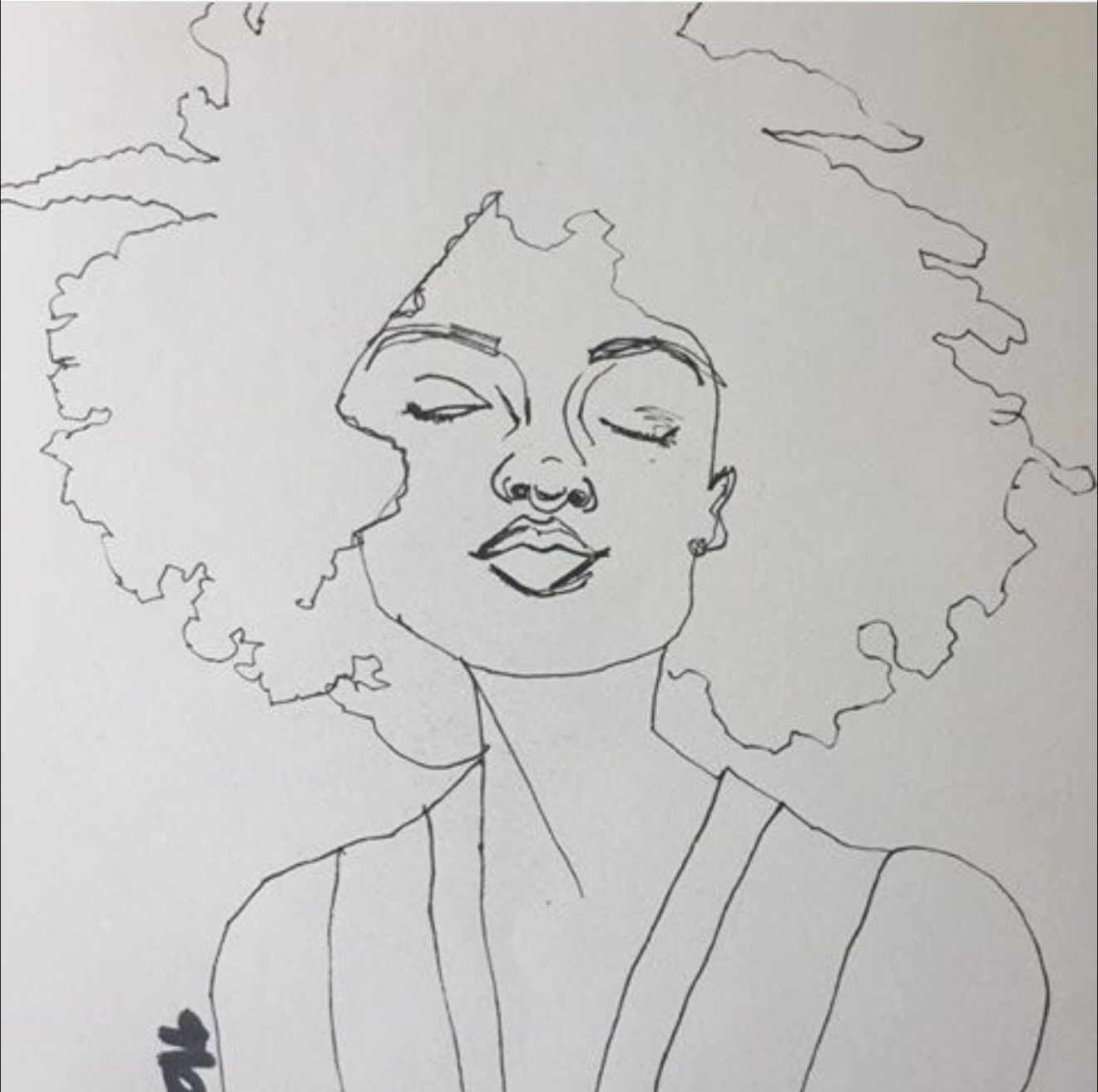
COMMUNICATING TEXTURE: HAIR
Sign up by clicking the image below to get your complete beginner fashion course for design and illustration and stay connected for more tips!
OR
Model drawing, technical details, figures, watercolors, sketches and illustrations, mood boards and research. The whole sha- bang! ON your schedule in a totally supportive and positive enviroment that is designed to bring out YOUR voice and celebrate it with you.
love always,
Laura