OBSERVATIONAL DRAWING: 12 ACTIONABLE TIPS to START GROWING AS A FASHION SKETCHER
I don’t like to make any strict rules about things when I teach or learn or live.
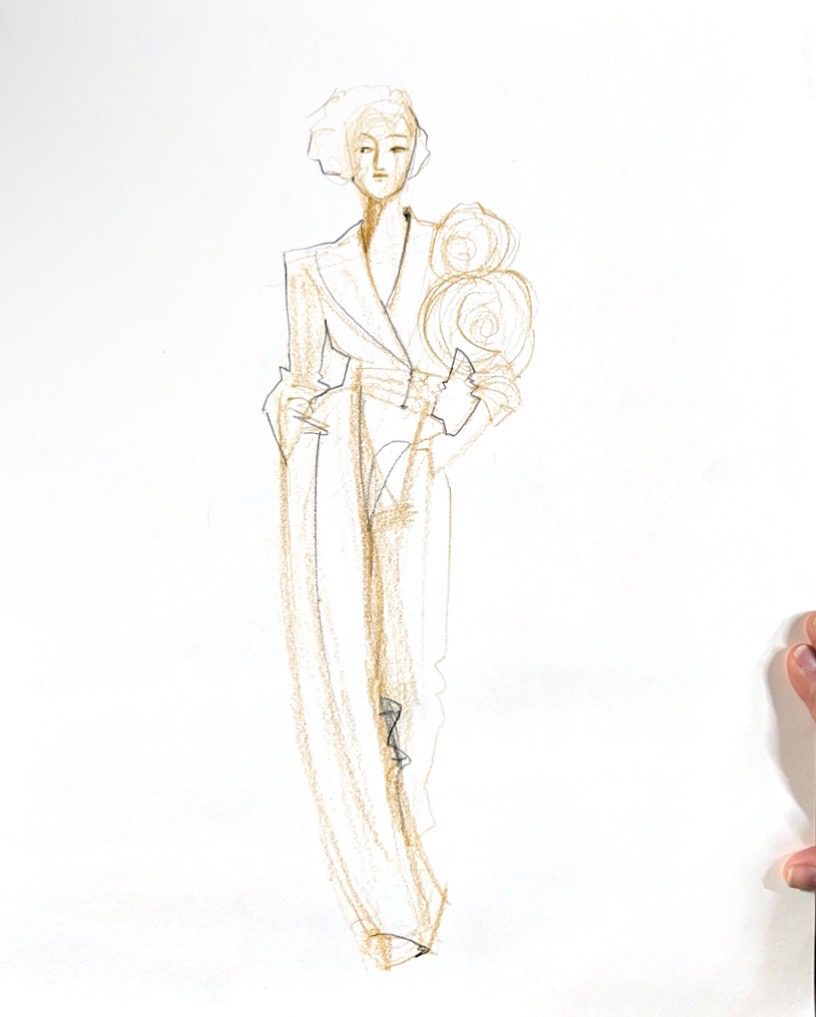
But I do know the best way to learn to draw fashion is by drawing what you see/ OBSERVATIONAL DRAWING.
I’m an idealist Virgo who is most creative when I know what the rules are, so I can push them and break them where I see want. So for any of you rule lovers or rule-breakers, here’s one of my big go-to teacherly quotes:
“The best way to learn to draw fashion is to draw from life.
Practice and grow your vocabulary by drawing what you SEE.” Laura
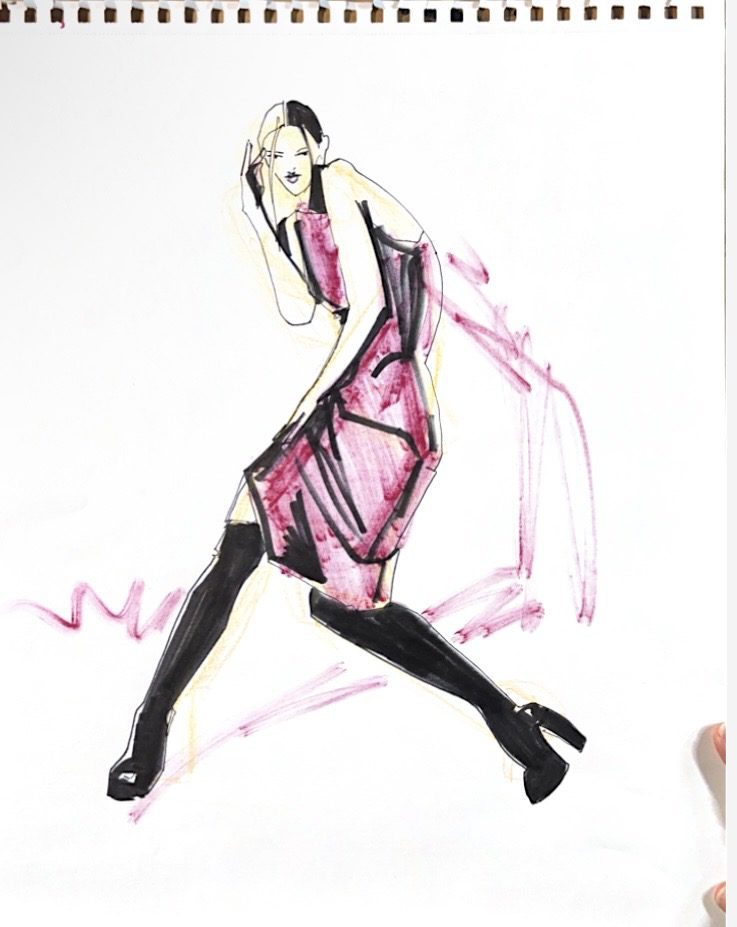 And, probably a thousand people have said that before me.
The amazing thing is, like so many things in life, there are a lot of CHALLENGES (and joys and discoveries) on the path to drawing what we see.
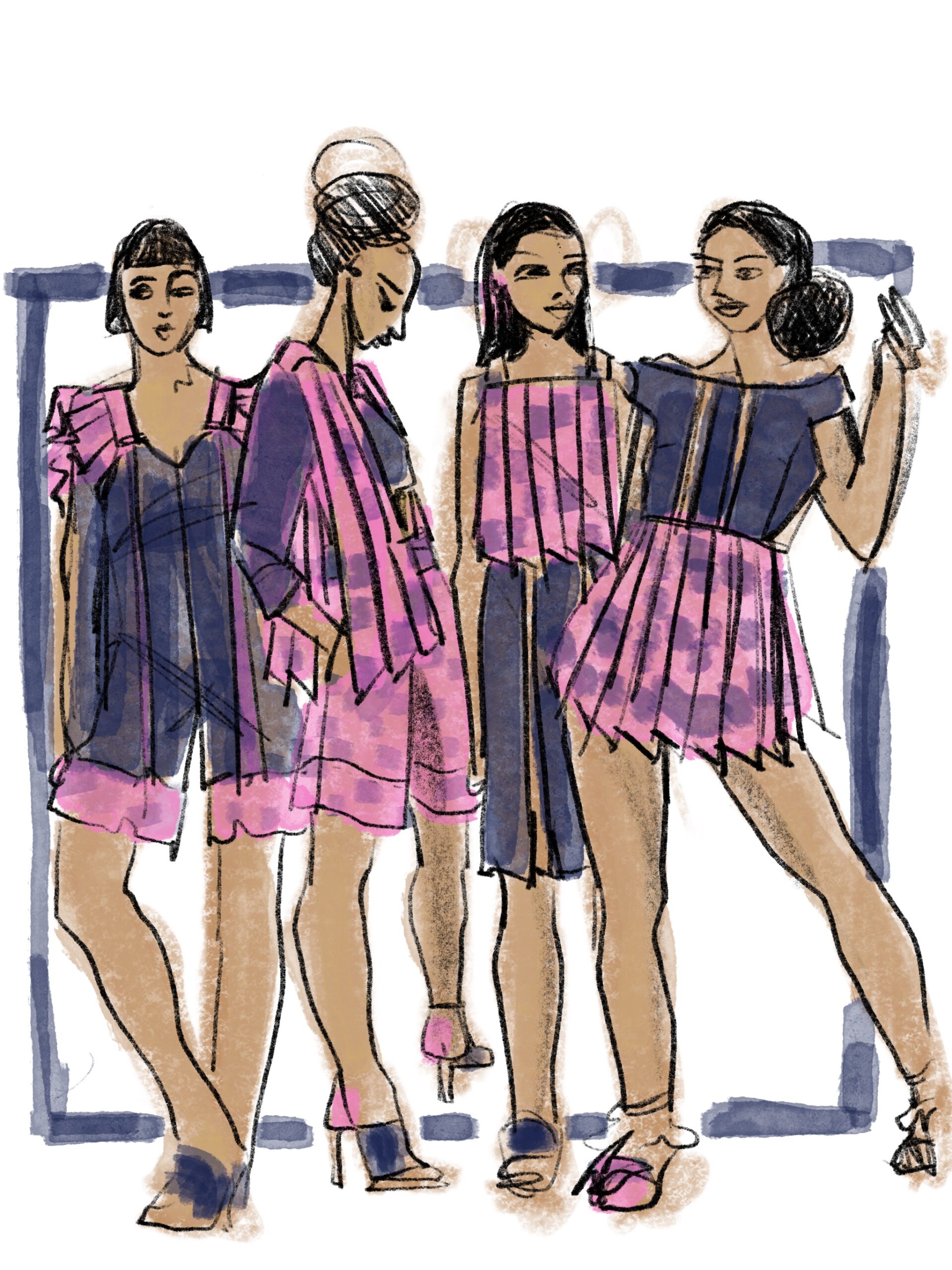
And THIS IS EXACTLY WHAT MAKES OBSERVATIONAL DRAWING SO POWERFUL.
(It also really paves the way to freely drawing from your imagination).
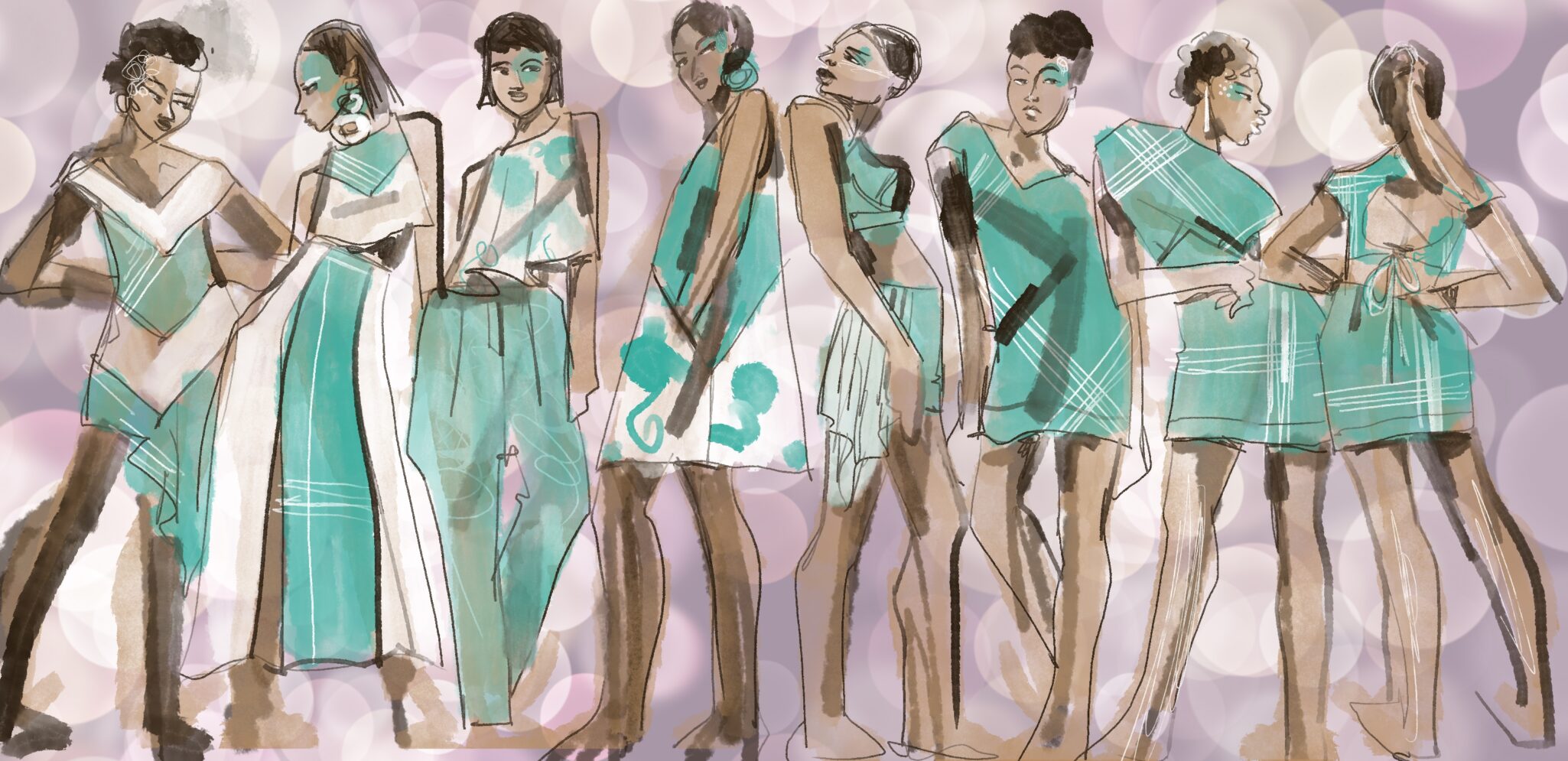
SO Why is the truth seem so “difficult” to capture??
Our ‘advanced’ brains are so intent on analyzing and processing what we think we are looking at–as well as responding to it emotionally–that we can often have a very difficult time drawing objectively and accurately at first.
It takes some practice to get into the habit of being HONEST about what we observe and translate that into marks on a page.
But every minute you put into your drawing practice, will come back to you in results. And this practice can be a time to forget everything else, like a meditation or a workout practice, it pulls you in to its focus.
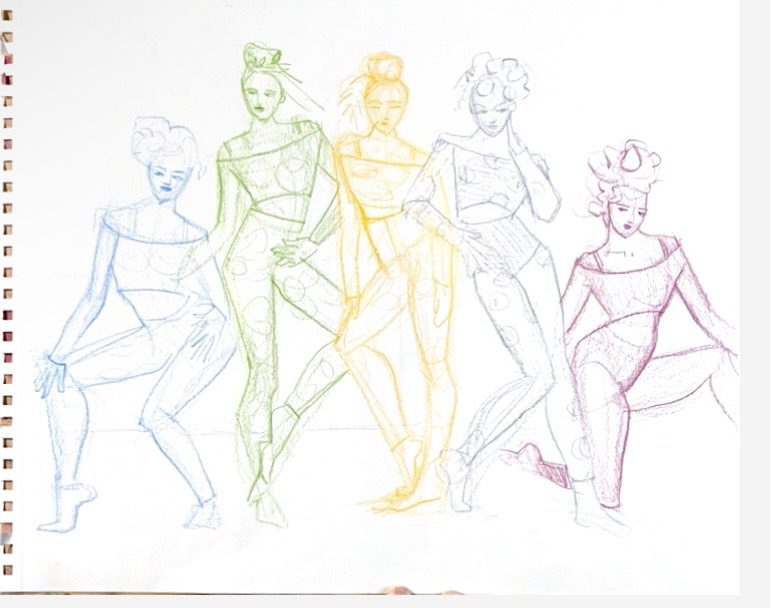
There is a sweet spot that we eventually hit.
The best combination is when you can combine the skill of observational drawing- accurately- with the freedom of boundless creative expression.
When you learn to draw fashion, drawing from life can be a real luxury: you need a model, or a subject, that is live and willing to sit still for you to work from. We don’t always have access to that.
Though WORKING FROM A LIVE MODEL IS A WONDERFUL EXHILARATING EVENT because you are working from a human moment in time that will never repeat itself. This breathes a lot of life into the drawing. And we like that.
I highly recommend you seek out a live model drawing event in your local area, not necessarily needing it to be fashion styled.
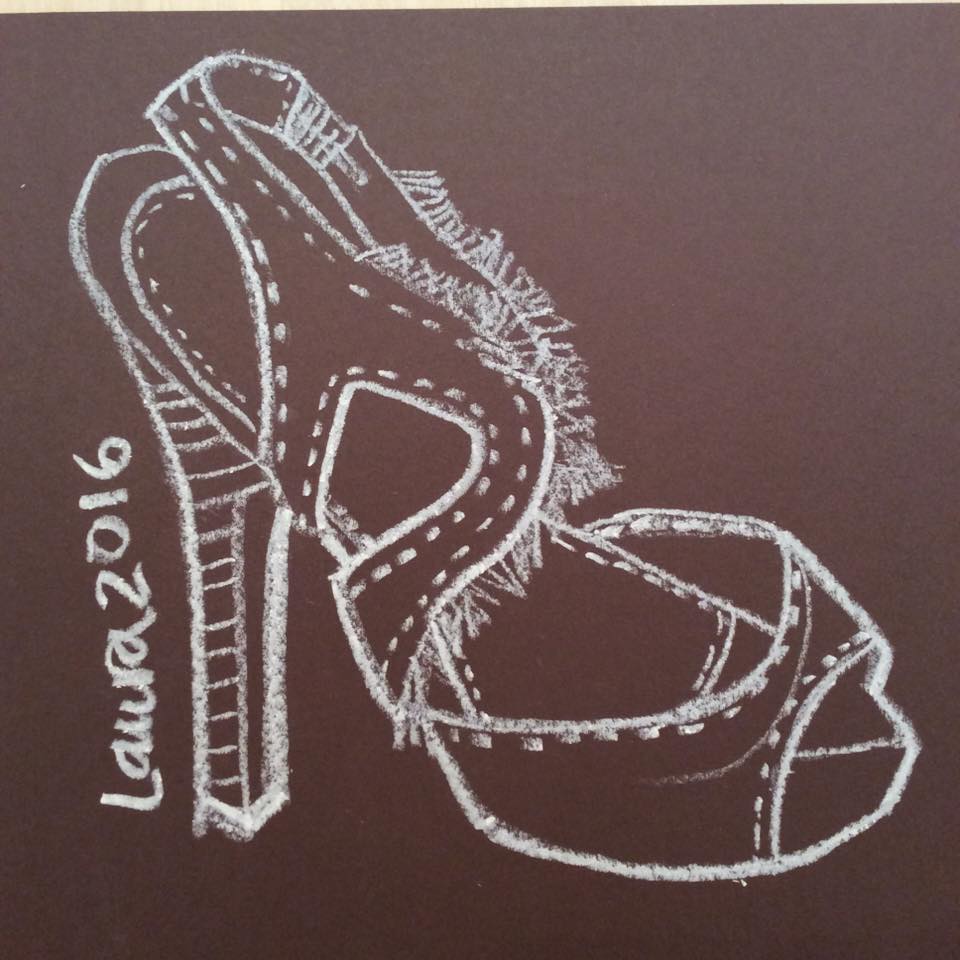
Fortunately, any time you see a beautiful subject now, you also have the option to snap a picture you can work from, so that’s a great resource too, although working from 3D is the most powerful.
PHOTOS from any source are not exactly what we call “drawing from life”, but at least they are “observational drawing” -drawing what you see
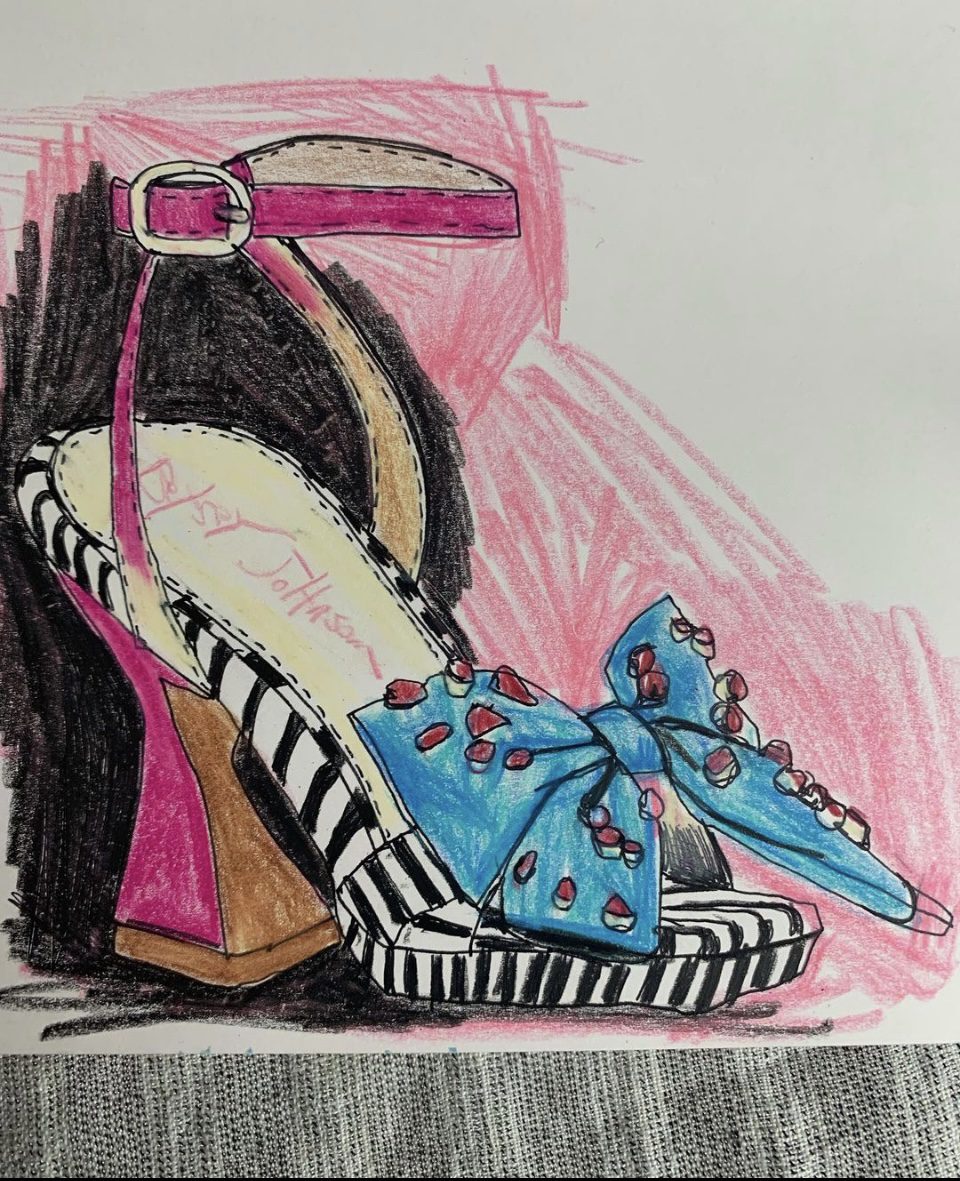
And this is where you get to study truth, analyze and embody what what exists in the visual realm, use your tools, mind and emotions to map it out on paper, and learn the mysteries of how to recreate with your hand what you see with your eye.
We’ll spend a lot of time doing this in my intensive online fashion design semester program, but…
drawing from life is something that you can do right here, right now, any time, and doesn’t cost you a dime, and always gives you growth in your skill. That just never stops.
Here are a few pointers
to boost your observational drawing practice :
-
- Start with graphite, pencil, or charcoal . Use “soft” or “b” range pencils for a wide dynamic range of expression.
- That said, LOVE your medium. If that means ballpoint pen or sidewalk chalk, so be it!
- Look for photos with a range of lights to darks for more drama and detail to feel out with your pencil. A gritty, toothy, or even toned paper can be fun too, but if bright white copy paper is all you have, or newsprint, so be it!! Each paper has its own personality and will bring out different aspects of your style and skill in fashion illustration.
- Rub your initial pencil marks with your hand to create a softer, grey ground to sketch into. Erase into this grey for white highlights if you need or want. (ONLY USE THE ERASER FOR THIS. BELIEVE: There are no WRONG MARKS to remove from your paper.) Try working by gently adding, and never taking away. Just try!
- ALWAYS work from an image or subject that inspires you, thrills you, or challenges you to try something new.
- If your model is live, walk around the subject and get the angle you find the most interesting. Consider the different ways you could fit your subject on the page, or how you might crop the scene (composition)..
- DON’T restrict yourself only to fashion imagery for observational drawing practice.
- The way we draw fashion models, faces, bodies, clothes, and figures, can sometimes be so different than the way we draw a hat, bag or shoes . (Or a chair, a tree or a bowl of fruit. Often we take our fashion drawing so seriously that we become unable to draw it as accurately as we can draw a plum :0). It’s important to note that and realize it’s our emotions and analysis that get in the way sometimes.
- Gently push your boundaries and ask yourself what you consider “fashion” and what you don’t. Take a minute to ask yourself WHY?.…………. who decided for you what is “fashion” and what is not. How do you feel about that? What rules would you change, pronto? What DEFINES FASHION FOR YOU? Be willing to be a little soft there and go in deeper. Ask yourself what really is fashion for you, and what is fashion “out there”, and compare the two. This is how fashion drawing is a journey within.
- Leave the color out of it for a while and do a tonal study of the major shapes of light and dark that you see.
- Block out the size of major shapes. SIMPLIFY FIRST.
- Decide how much of what you are seeing you actually want to include on the paper. For fashion illustrations, in the early days, I recommend getting really fluent drawing the head-to-toe fashion figure.
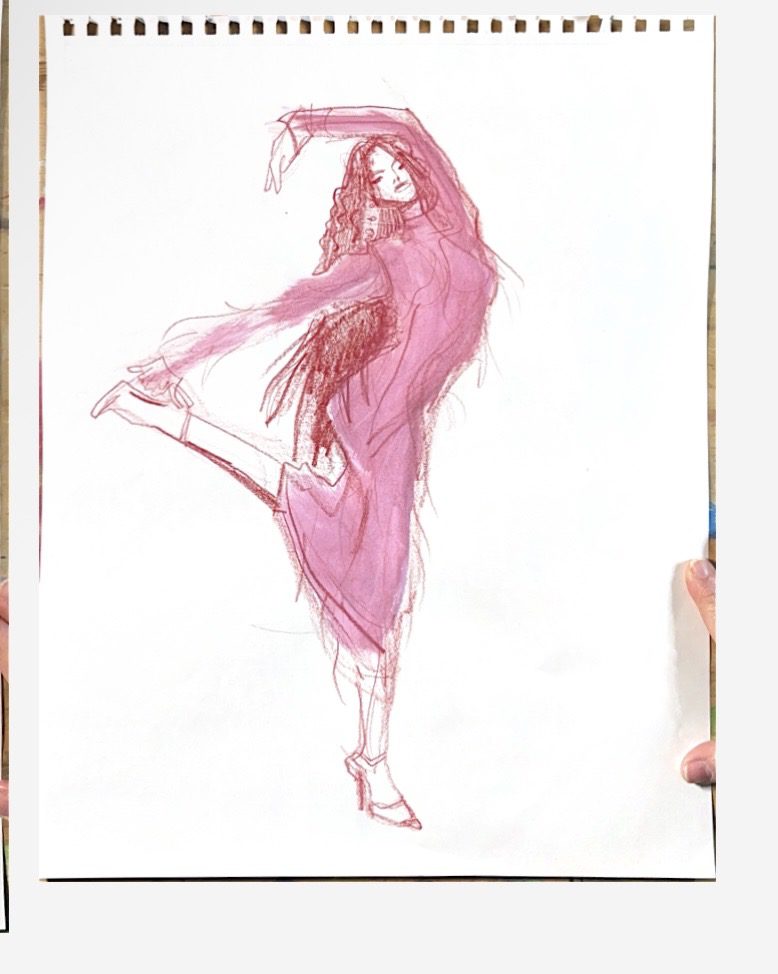
IMAGE RESOURCE FILES FOR FASHION MODEL DRAWING:
You can access some images quick (maybe they aren’t so much your style but they’re here) on some of my fashion figure files for sketching, Plus size fashion figures file and Fashion Figure File for sketching. These files are leotard or swimsuit models because in the beginning, I think it’s good to be able to observe what the whole body is doing.

My experience says:
When we draw strictly from our imagination, especially as beginners, we draw in a more simple, graphic way or more “cartoonish’ form…THAT”S NATURAL!!!!
That is how we get our ideas out and tap into some primal energies that have nothing to do with drawing “realistically”.
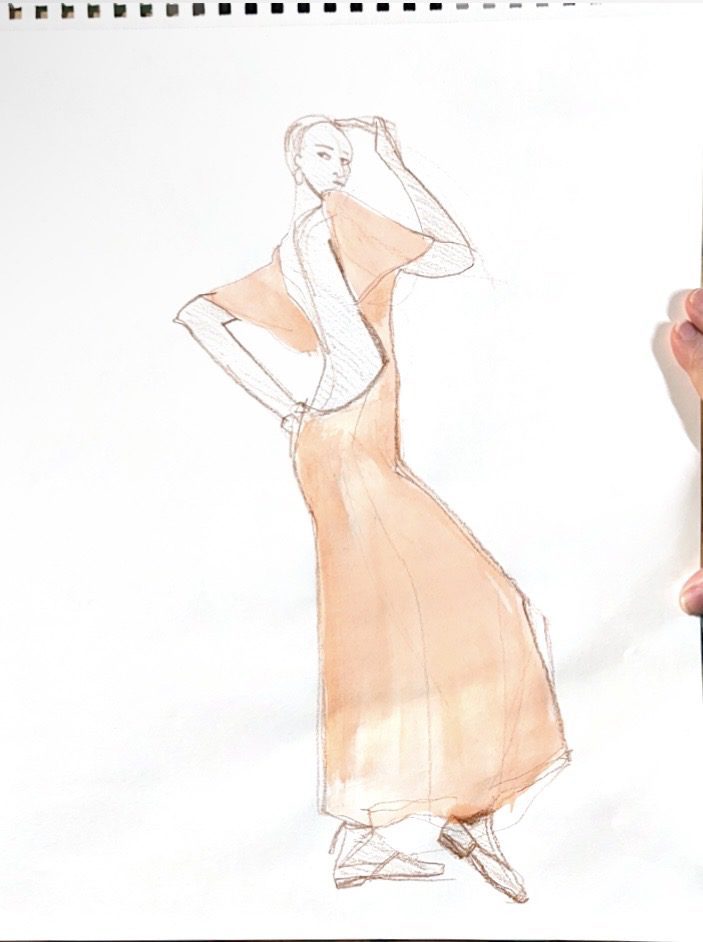
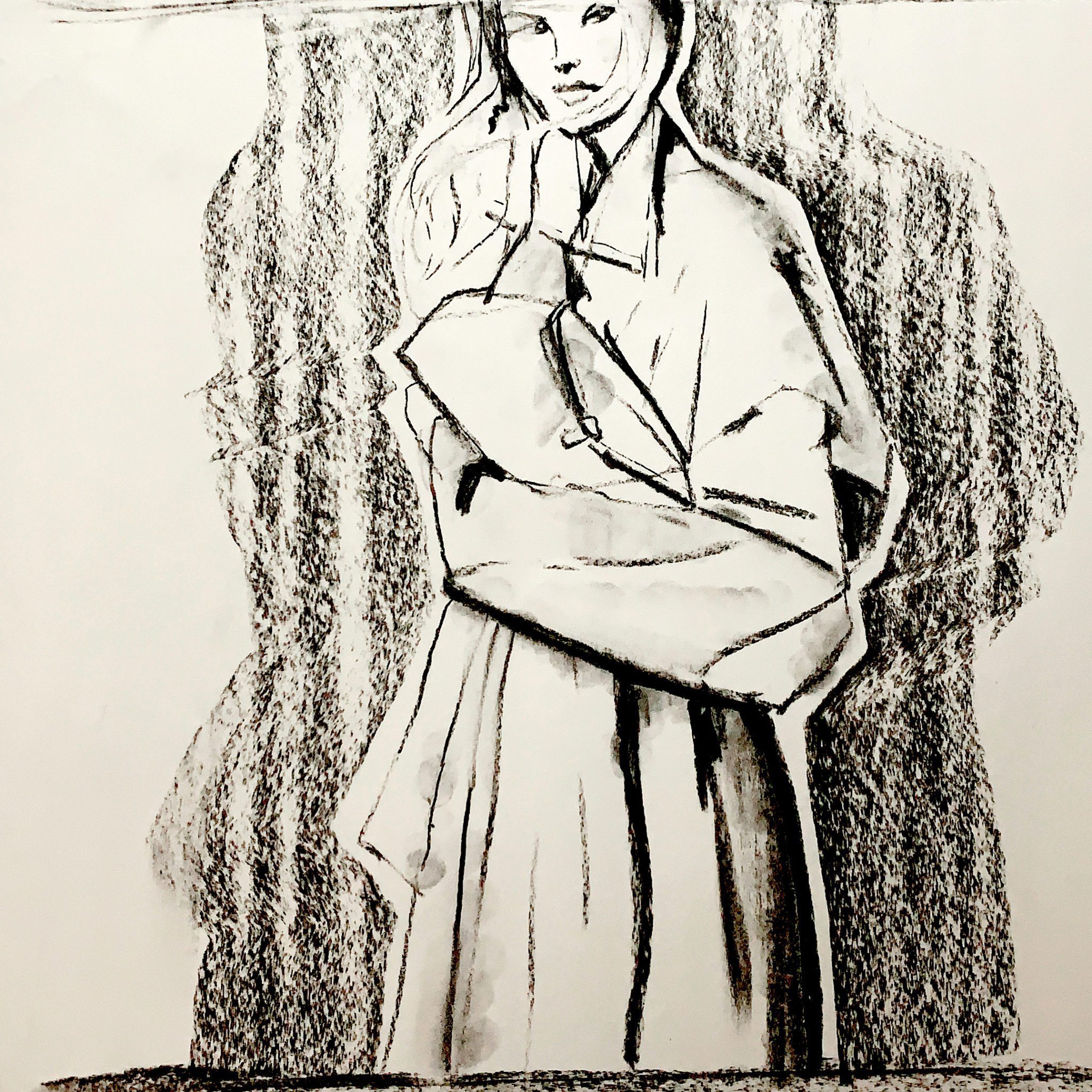
When you are done blocking out some major shapes of light or dark tone, and mapping out your forms on the page, a wash of watercolor or gouache tone can be an interesting addition.
For lots of video demonstrations and exercises, subscribe to my youtube channel!
Or join a course or program, all listed in my header menu under the “courses” tab, and all targeted to give you a fashion sketcher’s art skills from model drawing to color illustration. Check out my Courses and Programs!.
From pencil to marker to gouache to digital freehand fashion illustration, to patternmaking and draping. ONE STOP fashion education based on all of the courses I have taught at Parsons School of Design Fashion Design Department since 1997.


love always,
Laura