What does Impressionism have to do with fashion design illustration?
How do we define fashion design illustration?
That’s a trick question. Here’s the answer. The truth is:
It can go two ways.
Fashion Design Illustration includes details, seamlines, pockets…. (Collars, zippers, print rendering, cuffs, pleats, gathers, etcetera…..)
Fashion DESIGN ILLUSTRATION is what we (used to?) study in fashion school before Adobe Illustrator and other software classes took the pencils and physical expression away from fashion design education.
We learned to illustrate garments and looks and layered outfits while clearly defining all of the details of the fashion design.
The purpose is different than in just fashion illustration which only wants to communicate texture, feeling, life, and mood.
When you make a Fashion DESIGN ILLUSTRATION, you’re communicating something that doesn’t exist yet in 3d (a design concept that is going to be developed).
You need a lot of defined details so that by the time the sketch is done, you could hand it off to someone else to make the pattern / drape and sample (if you aren’t making it yourself)– and they will understand what you want.

It’s an illustration that is celebrating great design and so you WANT to include the finer details and emphasize the understanding of the complexities and fine details.
In fact, a lot of the design decisions are made DURING this process of sketching!
But “FASHION ILLUSTRATION”……?
is a looser style that design illustration. So you focus on extremes, abstractions, impressions…..
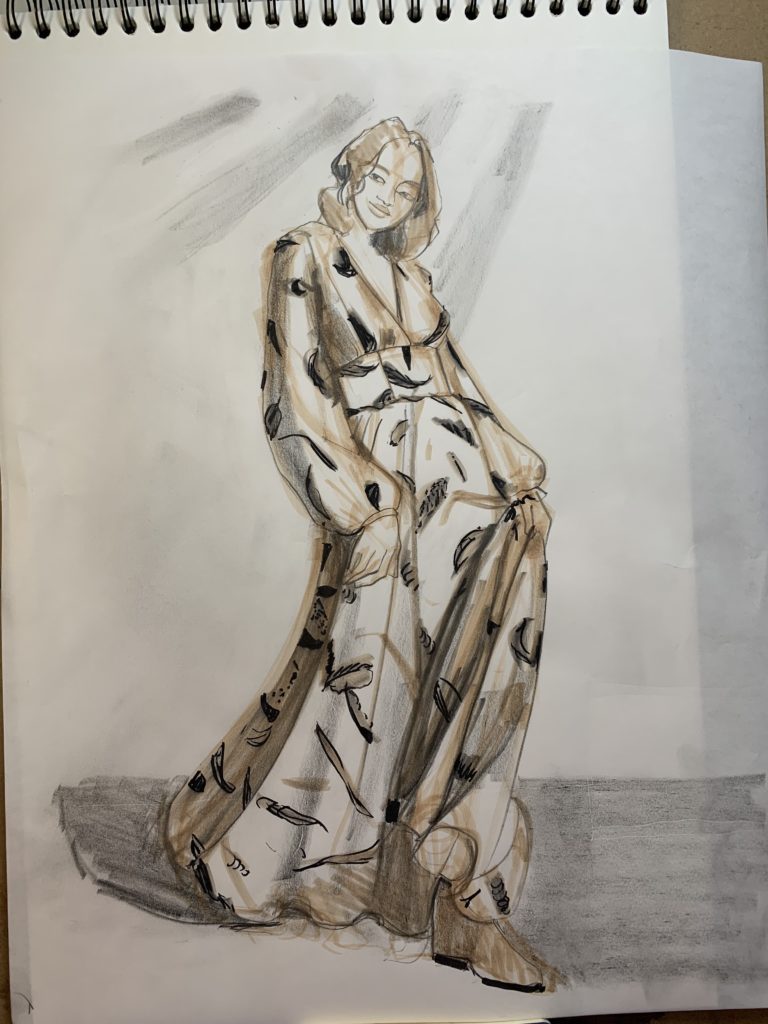
Fashion Illustration captures the shape, the movement, the color, the feel, without necessarily a need for obsession to capture the fashion design details, It’s much looser and open-ended, and can take in so much more of the artist’s interpretation.
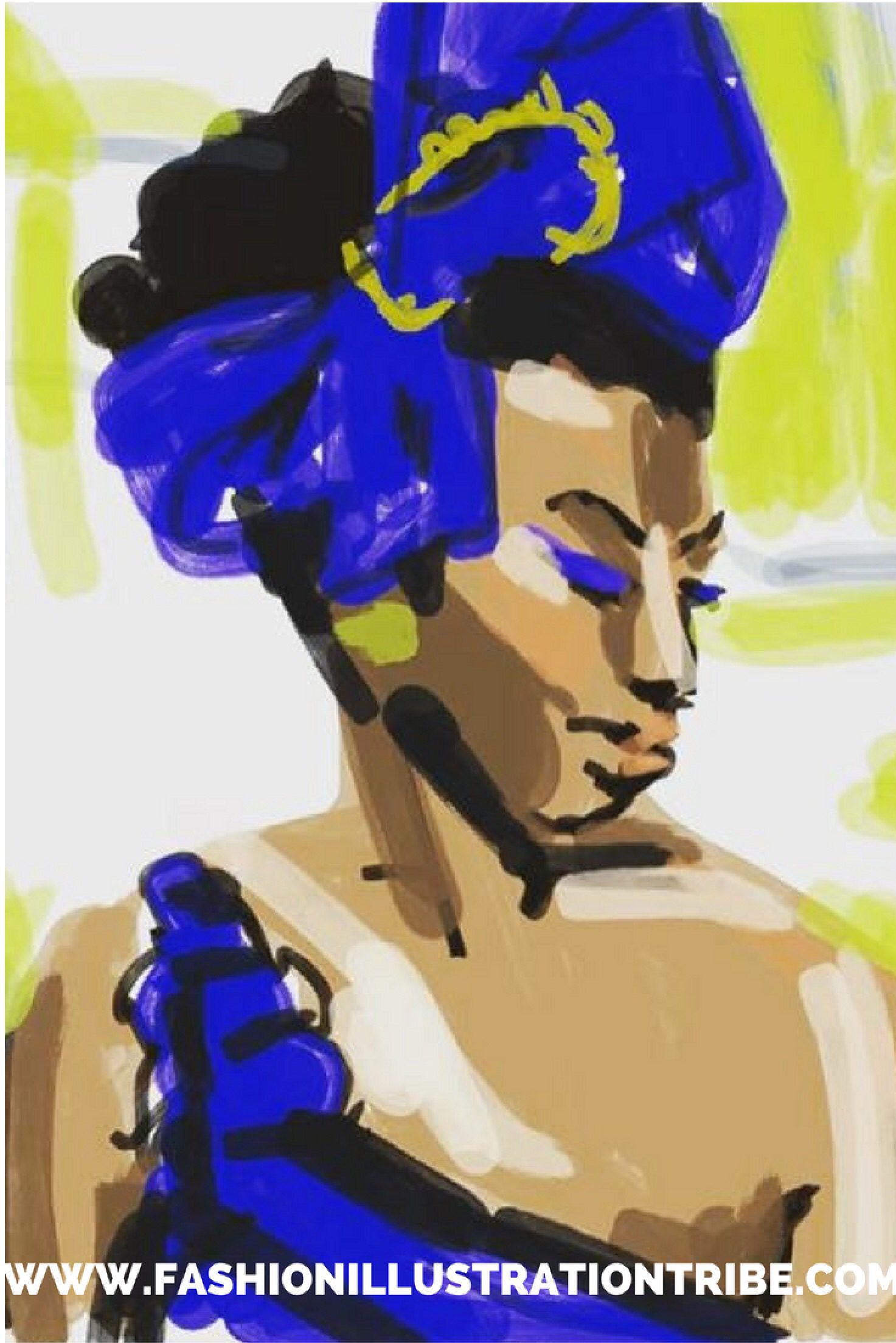
TODAY’S ILLUSTRATION EXAMPLE is an example of impressionistic fashion illustration.
Working from a fashion photo from @fashionfizz on instagram, I captured the color, the asymmetrical neckline, the hair accessory/ headdress….I FINGER painted this on my ipad mini (before I got my ipad pro, I worked out all of my digital fashion illustrations on a mini- I recommend it!)
Finger-painting (working on the glass without a stylus) and using bold strokes helped me capture a lot of feeling and information quickly: there’s a color story, silhouette, and a story,
There’s emotion.
There are very few details. EMOTION outweighs the details.
It’s Macro, not MICRO.
Key points I’d mention here:
- I used my finger and you can see that the tool i used (see the white and brown strokes over her skin tones on her shouldlers and neck) is wide and thick even like my finger! (When sketching digitally with my finger, I still get to select whether I want to use a super-fine line or a wide one like this. I can also choose its color, and how opaque or sheer it is, AND i can zoom in for finer details).
- I worked from a photo, so this impression is a bold generalisation of what I was seeing
- Using wide strokes and strong tones actually FORCED me to be able to catch an impression, quickly, because I can’t be micro-detailed, and because it builds up the image very quickly!!
*******ACTION STEP TODAY: TRY USING a wide, thick, bold drawing instrument instead of a fine pen or pencil line***********
- I used Adobe Illustrator Draw app for this one
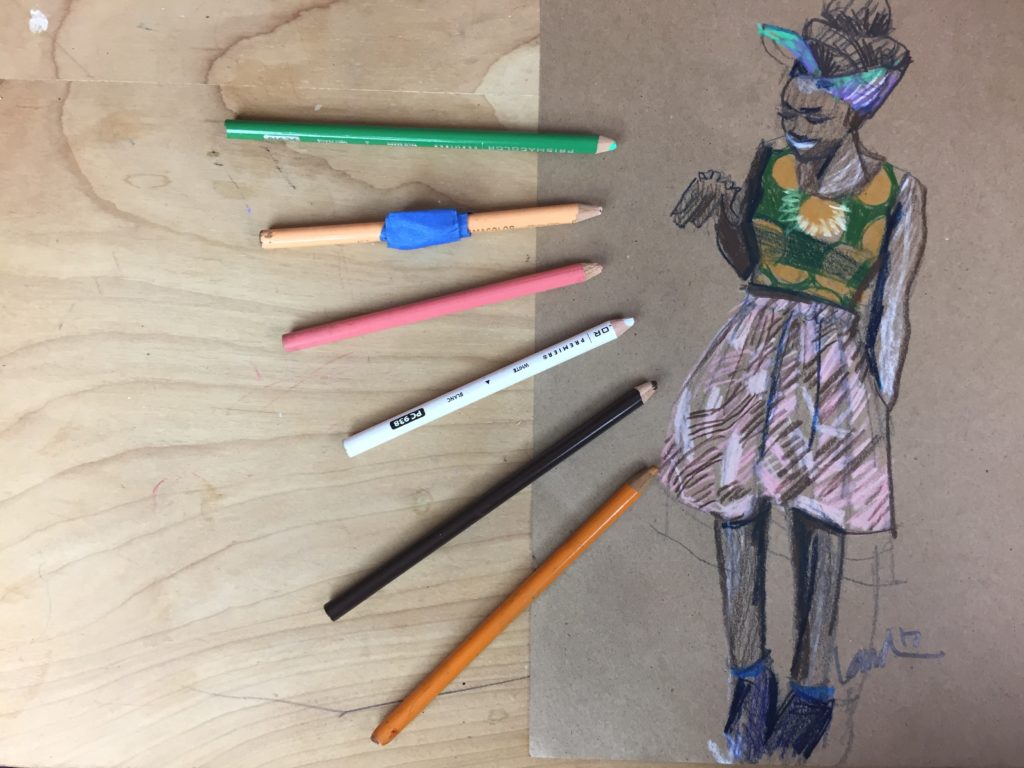
- if not working digitally, I suggest an oil pastel or collage to avoid getting to realistic or controlled.
See, fashion illustration, like most things in fashion, all depends on what you are using it for.
Impressions are fantastic for communicating a sense of speed, mood, and strong color or texture stories in a bold way. They feel “IMMEDIATE”.
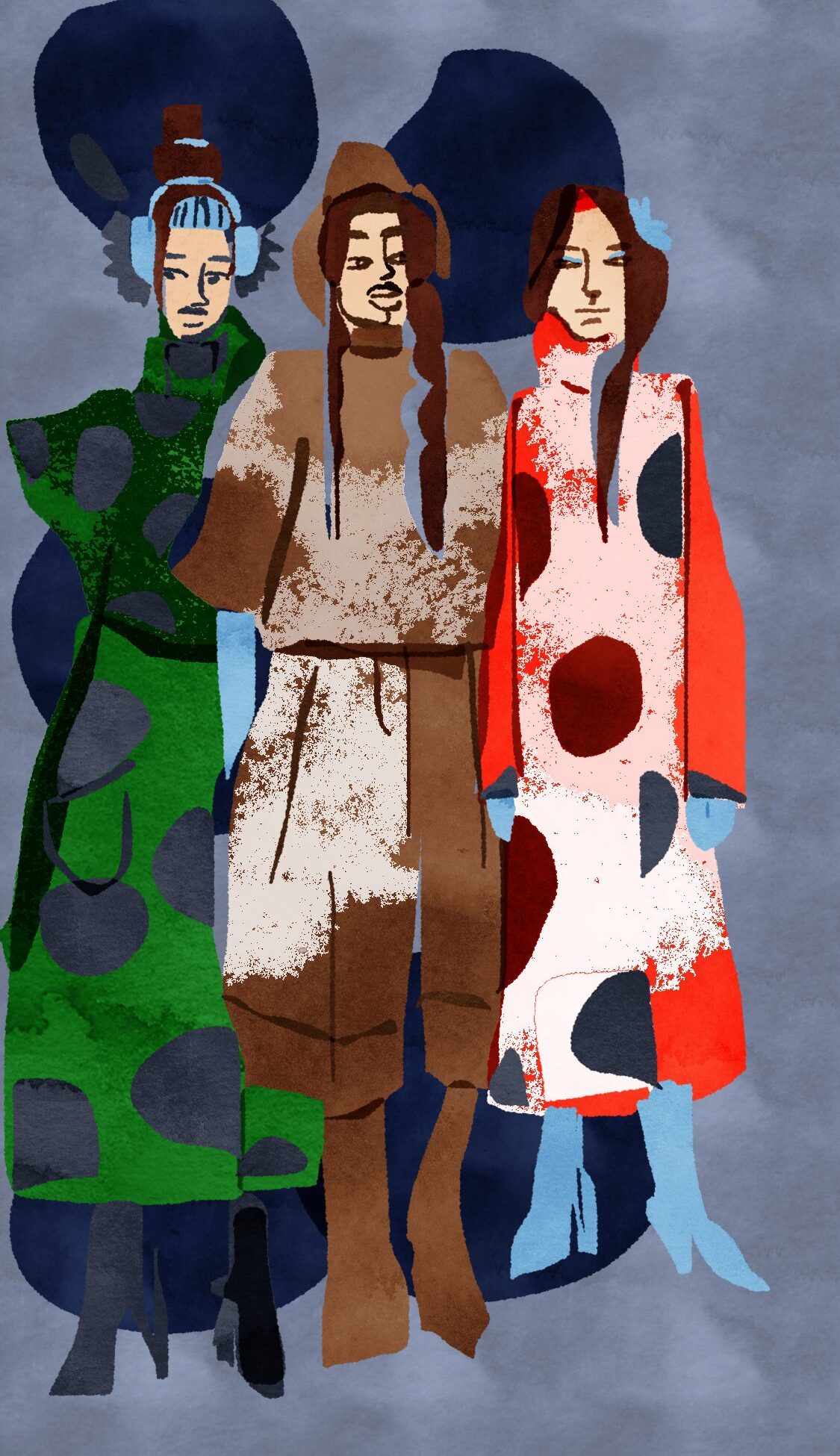
An attitude of IMPRESSIONISM in fashion design illustration:
can really boost your fashion design illustration skills no matter how detailed your work needs to be in the end
- Quick sketching skills; in a limited time frame rather than laboriously working details is a skill that allows you to capture impressions (like silhouette, color, and major details) almost immediately before the moment, the garment, or the live model is gone
- Even for detailed groups of sketches, the idea is to get your ideas to look real, not to create uber-fancy paintings. But How do we prioritize our time and energy creating illustrations? What do we capture first?
- Capture immediate impressions. What’s the order of importance? Pose. Proportion. Sketch. Shadows. Edges. Seams. Texture. Color. Closures. Accessories.
- How do we EXPERIENCE fashion? By impressions. Think about it: Someone enters a room. We get a sense of style immediately. Maybe we see something in a window or on a rack that we might buy. FASHION LOVERS love getting an immediate impression that grabs our attention, while details are something we notice later.
- Building our ability to zoom in and recognize what makes a look fascinating in a heartbeat is part of our skill of learning to see and recognizing/ defining what WE think makes great design great.
- Finally, when sketching ideas from your own head, being able to capture the essence of your ideas very quickly enables you to DRAW MORE IDEAS during your inspiration flow. This is the time when when we usually can’t sketch as fast as we can envision up ideas, and many get lost. So if you can sketch quickly, more of your ideas are captured on paper while they are flowing.
I hope this helps you
deepen your understanding
and love for fashion and fashion design!
In my Parsons career, I usually have students from beginner to portfolio and it is an absolute marvel to work with students in this way and watch them come to their full voice and skill, expressing fashion ideas that are personal, unique, and visionary.
Take a minute today
to think about how you might want to be a little more impressionsistic in your fashion illustration today, using less detail and looking for the major strokes and details to create a quick, emotional experession.
Add THAT to your toolbox!
I’d LOVE to see what you make, and hear your thoughts in the comments below.
What about you?
Do you think your work could be more impressionistic or more detailed and get a bigger impact?

Laura
ps check out Model Magic bootcamp or About Faces digital painting course