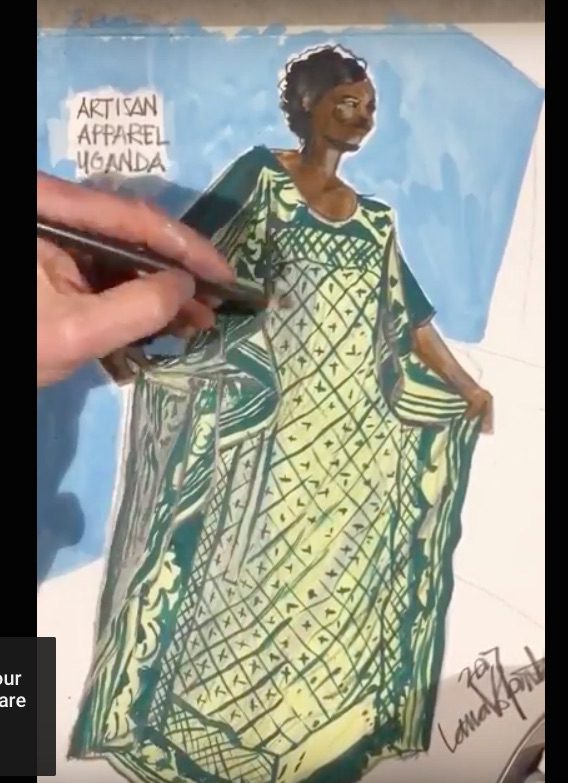
Fashion illustration, figure drawing, movement.
What is it?

What comes to mind to you when you think about the concept or FEELING of movement, motion, and emotion when thinking of figures and of clothing?
Abdm what about when thinking of movement as a design principle?
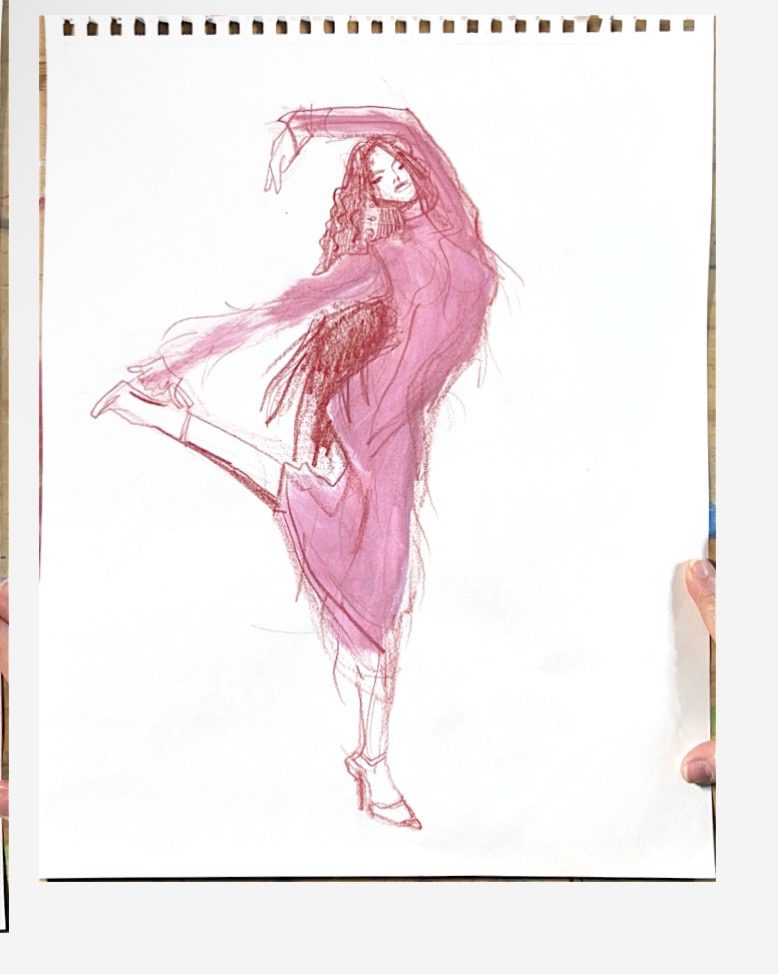
As much as it describes actual MOTION, “movement” is also a design principle that is present, conscious or not, in all design, imagery, and visual expression.
NOT ONLY important in FIGURE DRAWING or fashion illustration, movement is a design principle that I also discuss in COLOR and DESIGN THEORY lessons (priceless essential information!).
So, MOVEMENT is literally that:
MOVEMENT.
ACTION. ENERGY. LIFE FORCE. So important for fashion drawings.
Think about what happens to your eye when it’s encouraged to MOVE from place to place on a page, rather than rest in just one.
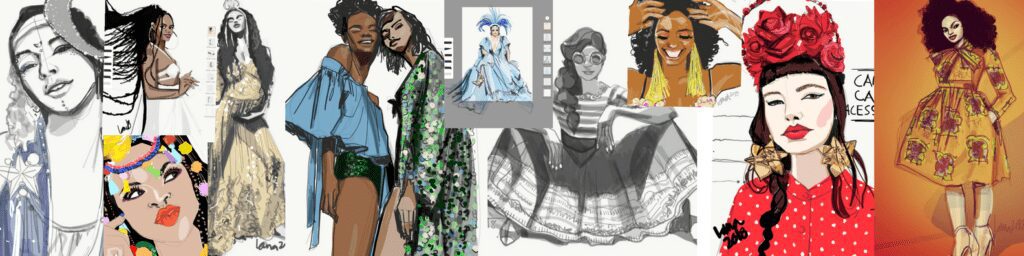
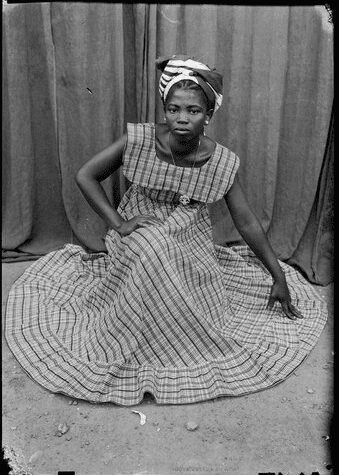
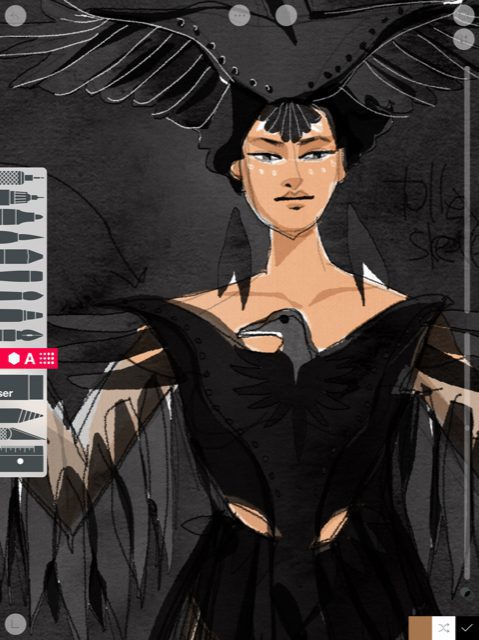
The images on this page point to what movement is in design, in drawing, and most specifically FIGURE DRAWING. (and we’ll get more into that in this post)
On a more personal and human level, movement is something we just feel in our gut.
It’s like the, wind. Like electricity or spark. It’s like feeling, it’s like action, vitality, it’s like life and energy, heat, warmth. It’s exciting. It’s enthralling, flowing, natural, and, well, …..moving!
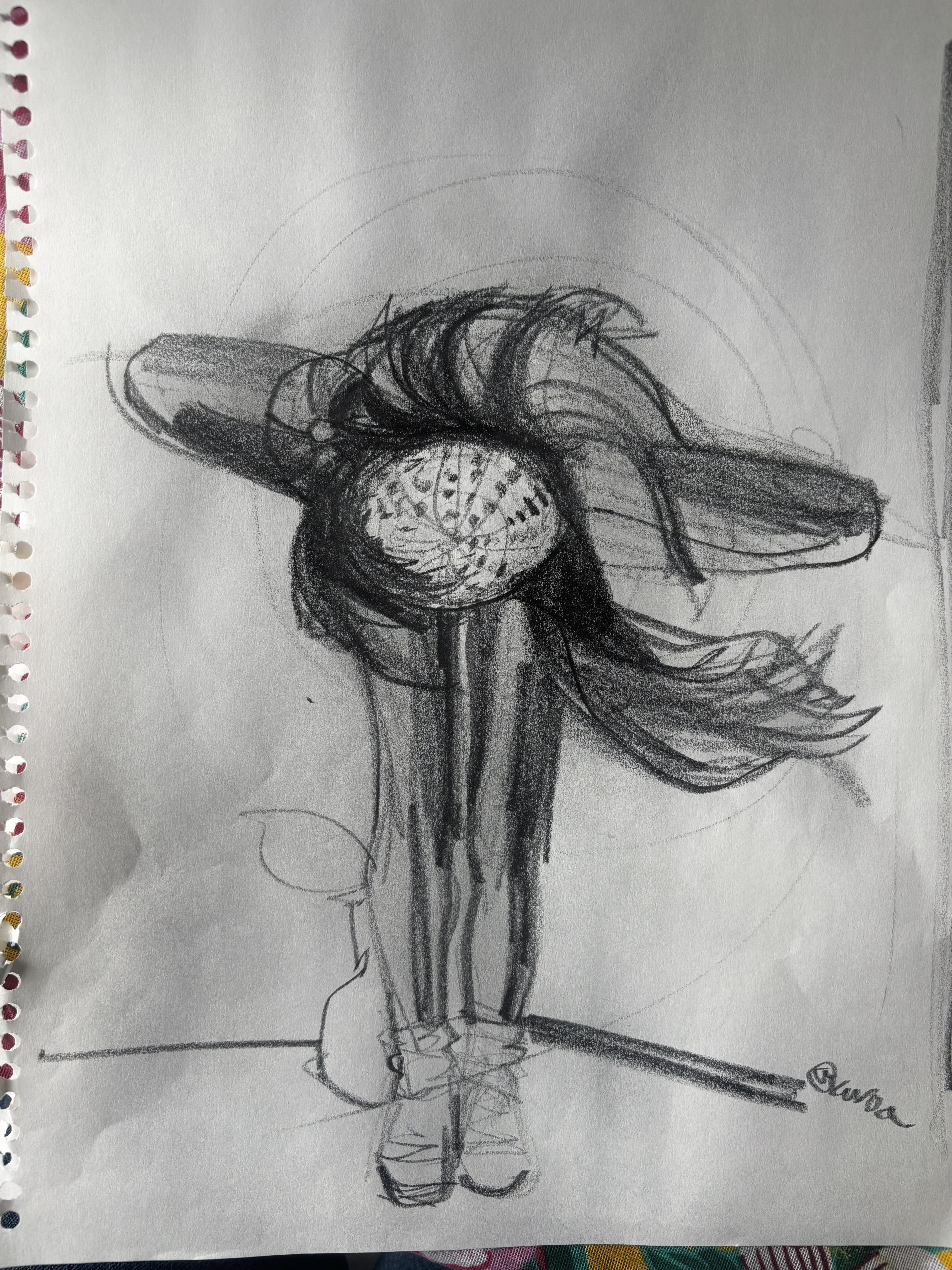
MOVEMENT: ESSENTIAL TO FIGURE DRAWING
MOVEMENT is especially important in figure drawing. No matter how subtle or emphasized it is, I believe that MOVEMENT is one of the key elements that bring our figure drawings TO LIFE. That vitality makes the figure on the page more believable, engaging, and HUMAN to the viewers. And this… transcends the level of the drawing.
MOVEMENT IS ABOUT ATTENTION: Where is the viewer’s eye going?
Understanding movement allows you to control this.
The first thing I want you to pay attention to/think about is diagonal lines:
In figure drawing, I usually look for the plumbline first: A pure vertical, imaginary line that I imagine running up and down the center of the figure I’m viewing, parallel to the walls of the room, perpendicular to the floor, or even within or next to the figure.
That helps me focus and compare the locations of components of my sketch along a vertical axis (like the head and supporting foot, for example).
The plumbline is useful, but THIS IS TECHNICAL, and rather dull, right?
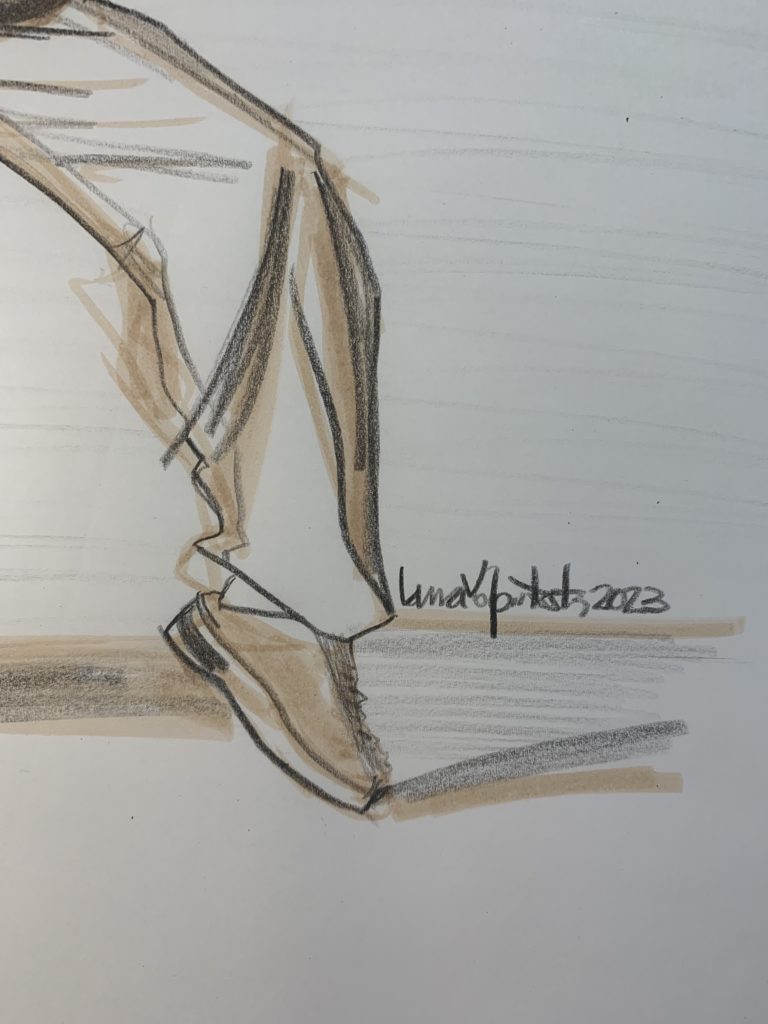
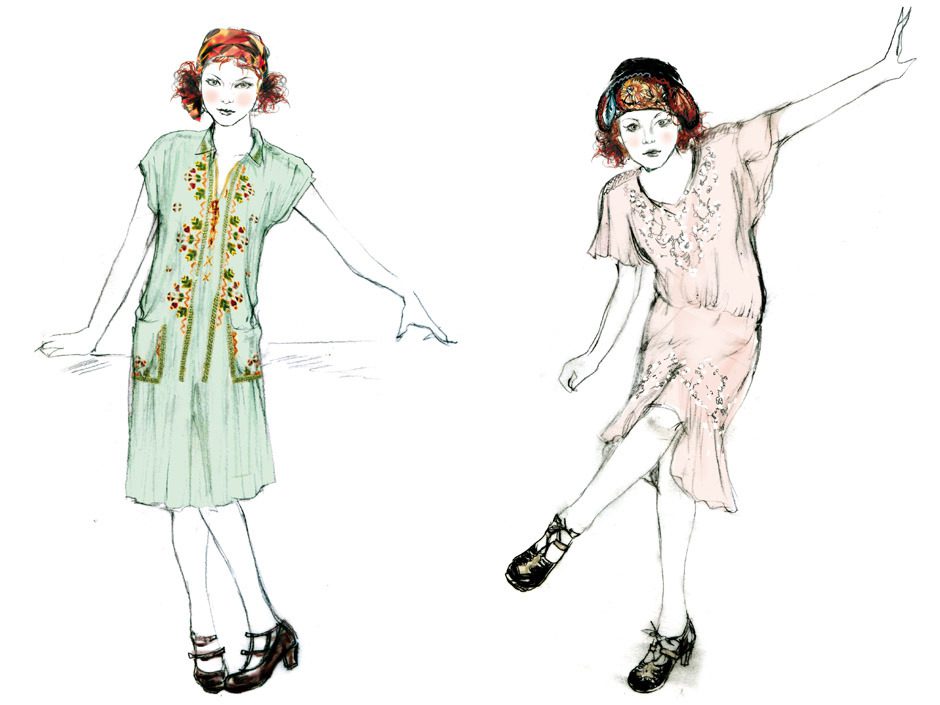
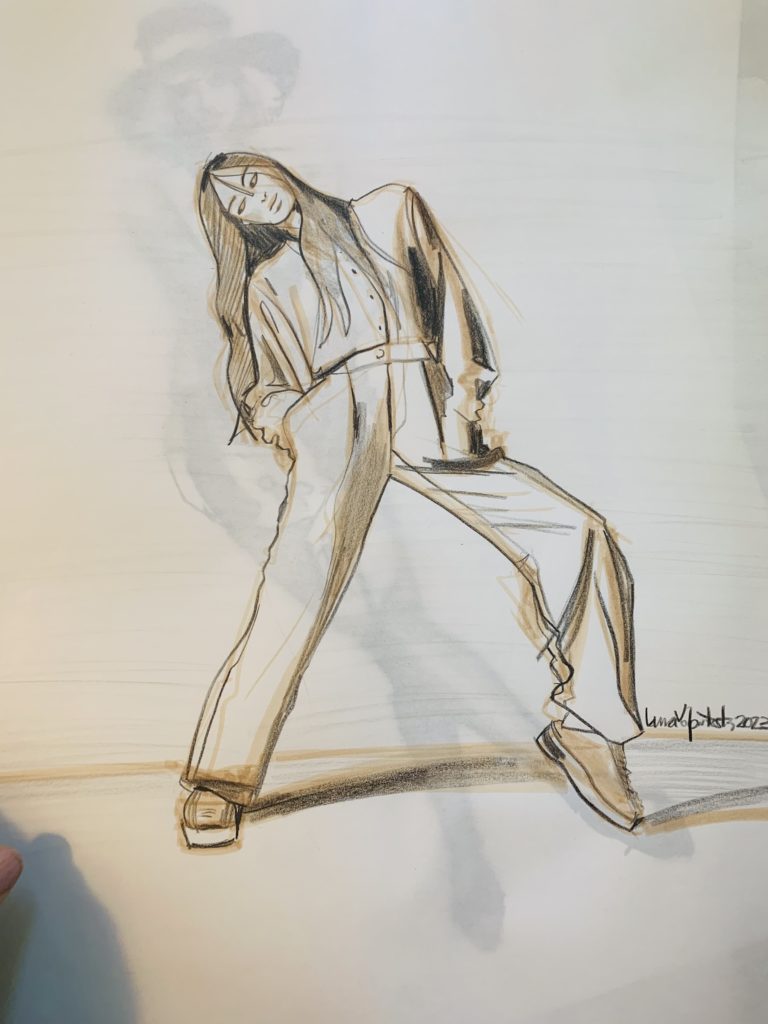
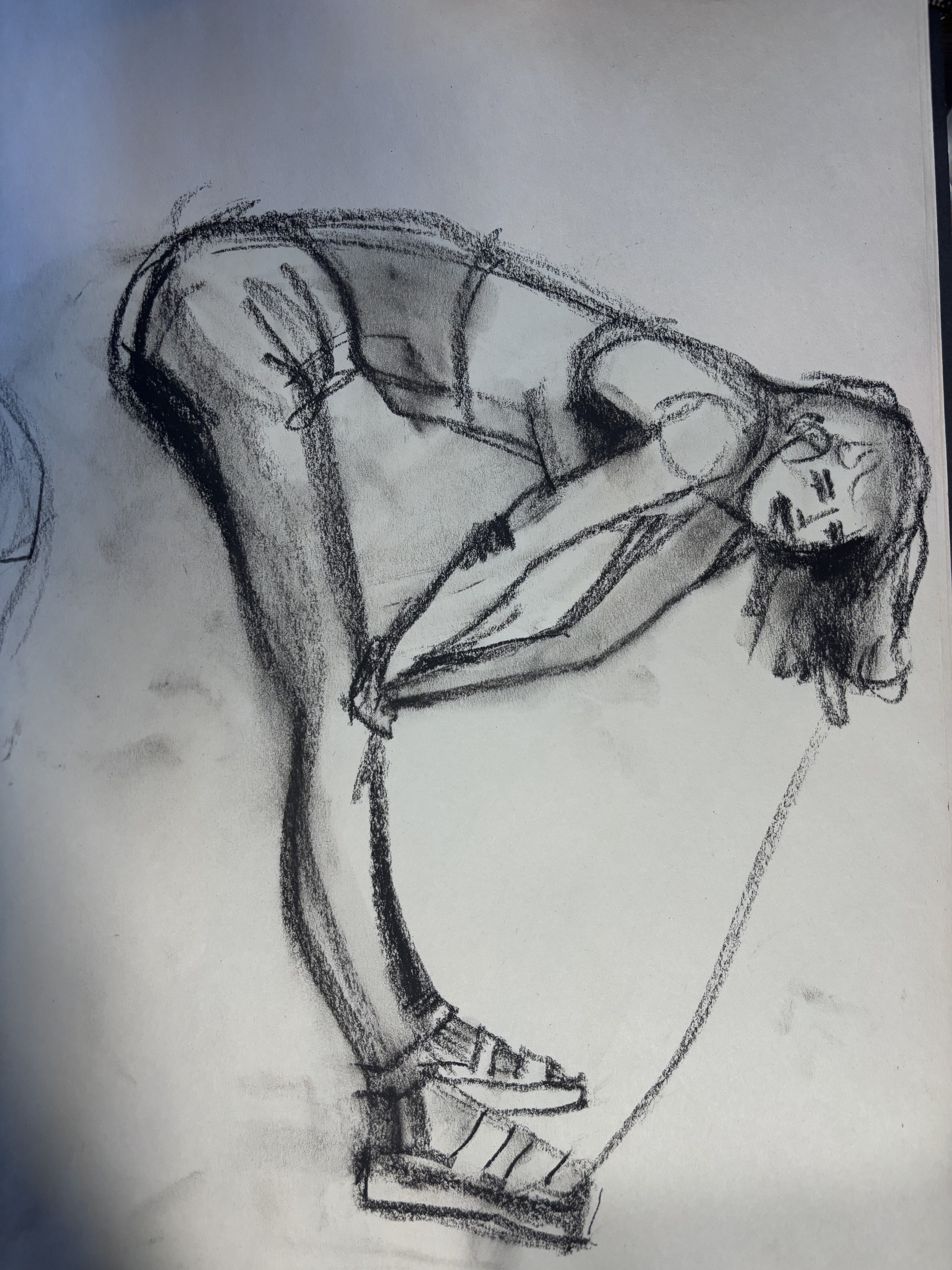
I’ve included this detail above of a fashion sketch from my weekly zoom sessions in Fashion Sketch Group, to show you how much movement is in my handwriting, in the shadow on the floor, in the bend of her leg, in the stroke of the pencil, in the sweeping strokes of the background.

We know we see and feel movement, but how do we DEFINE what it is that makes us see and feel that? These are the kinds of things I teach in my COLOR THEORY classes for my fashion design i students at the university and I’m running it for you all this summer for the first time. Are you in? Because Color Theory is two things: COLOR and DESIGN PRINCIPLES, explained and experience.
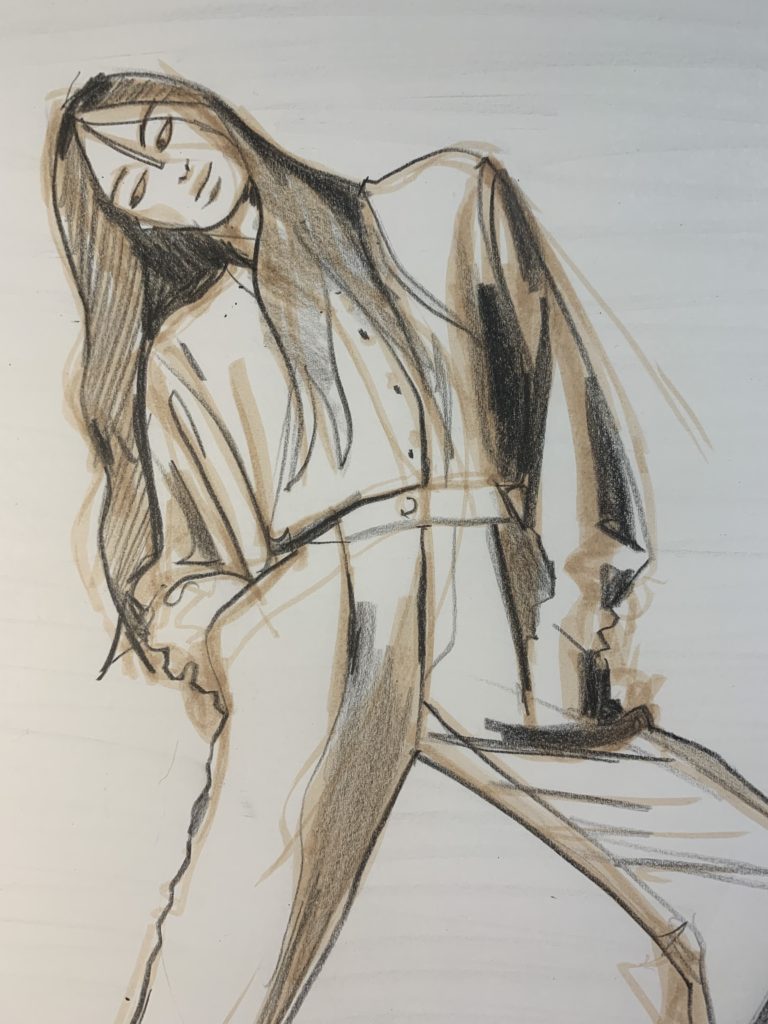
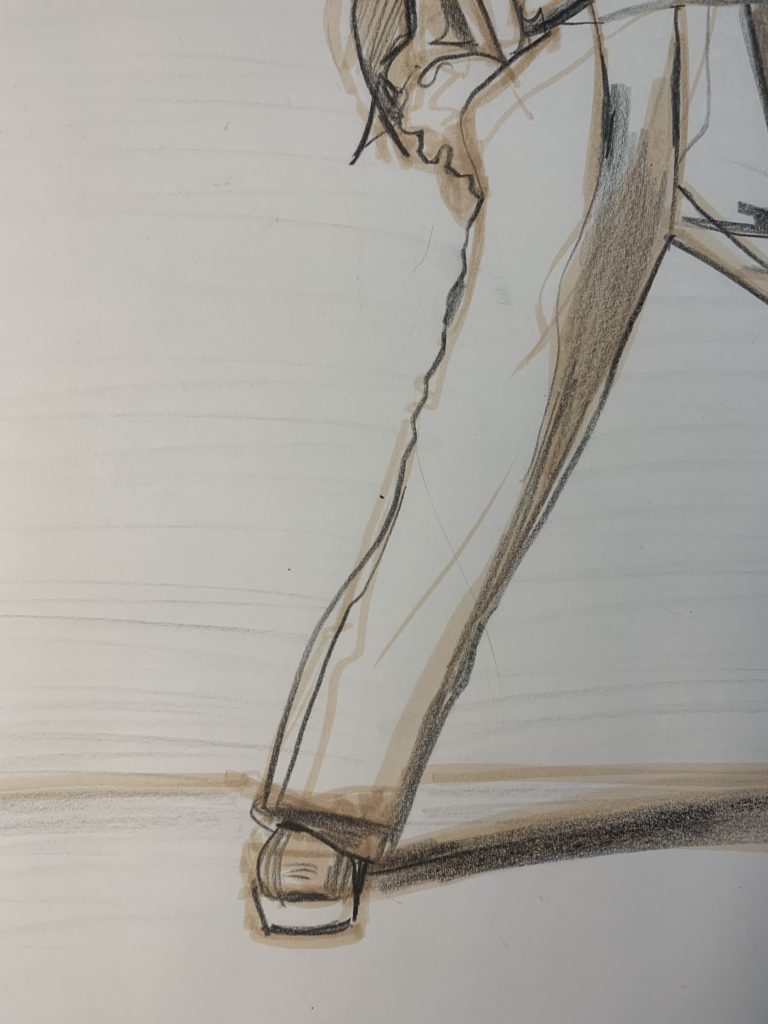
So again, here is just a leg. But look closely above. The whole LEG is diagonal.
The shadows on the floor, the shadows and tugs of the fabric pulling against the body, all diagonals. And this gives vitality, it makes your drawing “dance”.

ON DANCING and FIGURE DRAWING
And when you love movement, you ARE dancing while you draw. I teach my students to stand while they draw and to use their whole body instead of just their fingers.
The sweeping movements of your arms and the energy in your body MAKE A DIFFERENCE in your drawing and your personal experience!
It could feel odd at first but I know from my own experience how quickly we adjust and feel more enjoyment when we draw with our whole body.
Play
LINE QUALITY CREATES MOVEMENT
Another “diagonal” that creates movement is in the quality of line when a line TAPERS.
Line is line, but if you can zoom in, it is also a shape! Many lines start off thick and finish off thin. This is ALSO an example of a progression, a line that comes in bold and then fades out (or vice versa) also adds vitality and visceral, vital, pulsing energy to your sketches.


The sketch above is also from my live sketching group sessions on zoom where we warm up with figure drawing and move into fashion garments.
Now that your eye is trained, can you find the diagonals?
In the criss-crossing of her strappy sandals? At the core of each leg, even though she is standing firmly on both feet? WE STILL FEEL MOVEMENT don’t we?
And this is why I say we learn to draw more by changing how we see than even by drawing itself.
ANGLES OF THE HEAD
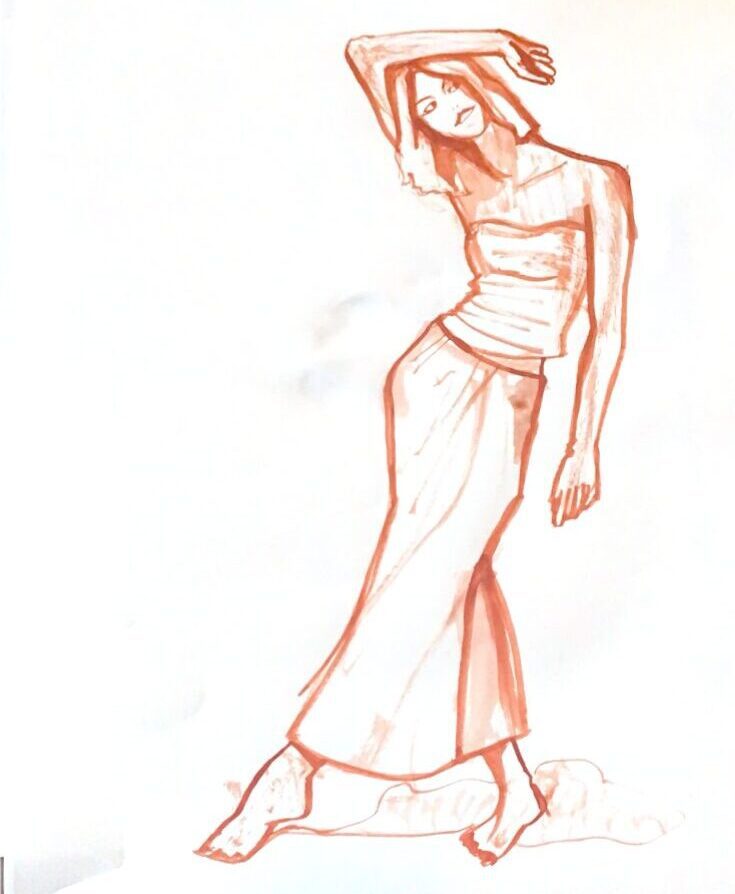
There is an imaginary line through the face of any fashion model (by the way when I say fashion model, I mean whoever you are drawing in your fashion illustrations. It’s ANYONE you want!). Imagine an imaginary ruler running up the center of her face, between the eyes, nose, center of lips , chin… that center line of her face becomes diagonal when the head tilts in any direction.
Can you feel it? It gives an ATTITUDE and an EMOTION and a FEELING as well as movment. Right??
Like wise if you look at the sketches on this page and notice if you had a ruler from ear to ear, or shoulder to shoulder, knee to knee, hip to hip, toe to toe….all of these relationships have a DIAGONAL spirit in what I call “action poses”…. in fashion illustrations and figure drawings that have DYNAMIC MOVEMENT in them.
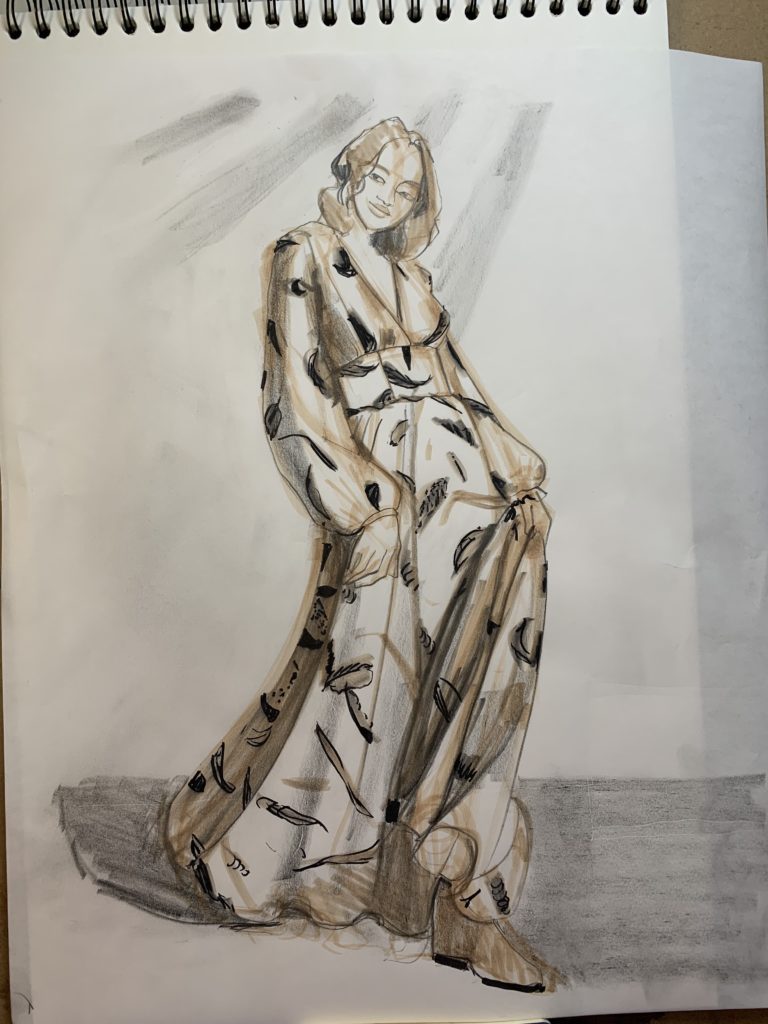
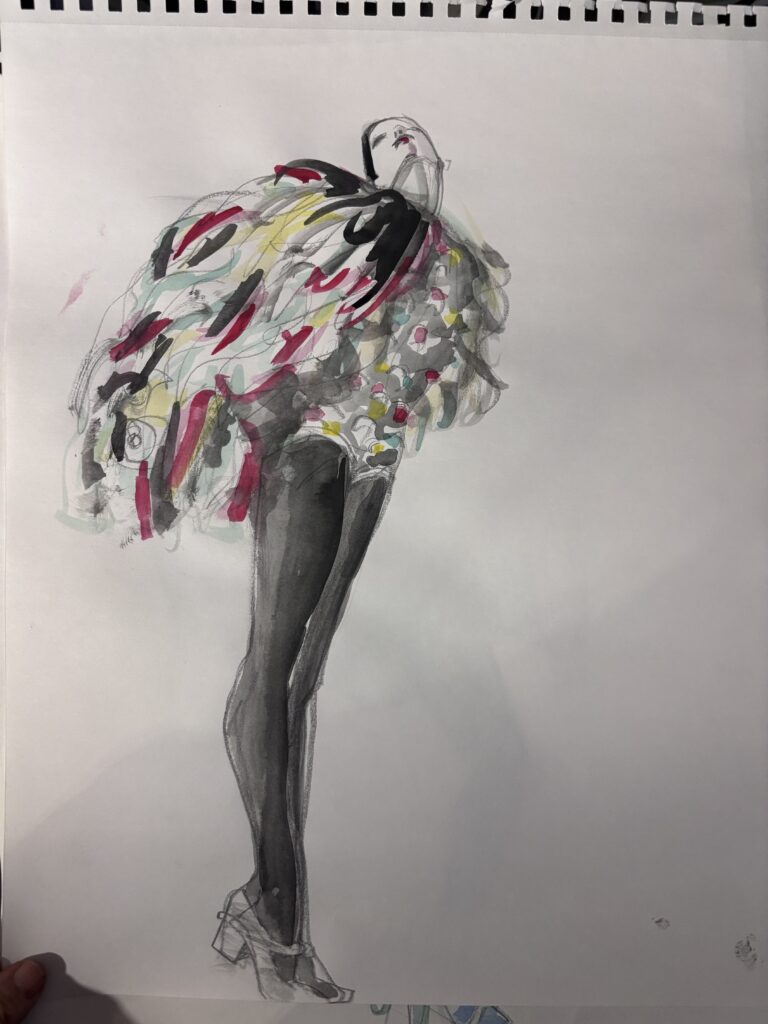
Sweeping diagonal lines and /or shadows on your fashion illustrations, figure drawings, even on your flat sketches, are guaranteed to add life to them and to distract from any little things that you aren’t happy with in the sketch.
This is the magic power of ASYMMETRY in drawing and painting as well as in fashion and design!
ACTUAL MOVING PARTS IN MOTION

Observe closely the movement in today’s drawings and allow yourself the luxury of exploring the concept your next fashion drawings infusing them with very essence of “DIAGONALITY”…
Diagonals, movement, life.
You can always contrast them with some stabilizing, still, static, anchored elements somewhere else in the page composition.
For example, the four edges of your page are ENTIRELY stable and containing, a frame for your wild expressions! the horizon line or architechture may be totally horizontal or vertical.
Look for those contrasts and give them some attention in your sketches.


I hope you found this post helpful. Do browse around the blog, there are so many articles and tips, resources, tutorial to spark and ignite your inspiration on this journey of self expression and creative discovery, for professional or private purposes.
I hope you’ll subscribe to get your welcome bundle and I hope you’ll share your discoveries with me in the coments below.